Subscribe to stay in-the-know
Enter your details to receive communications about our products and services, events, and cultural endeavours.
Celadon ceramic cups are about glaze tone first: soft green, blue-green, or jade-like surfaces that make a daily cup feel quiet and grounded.
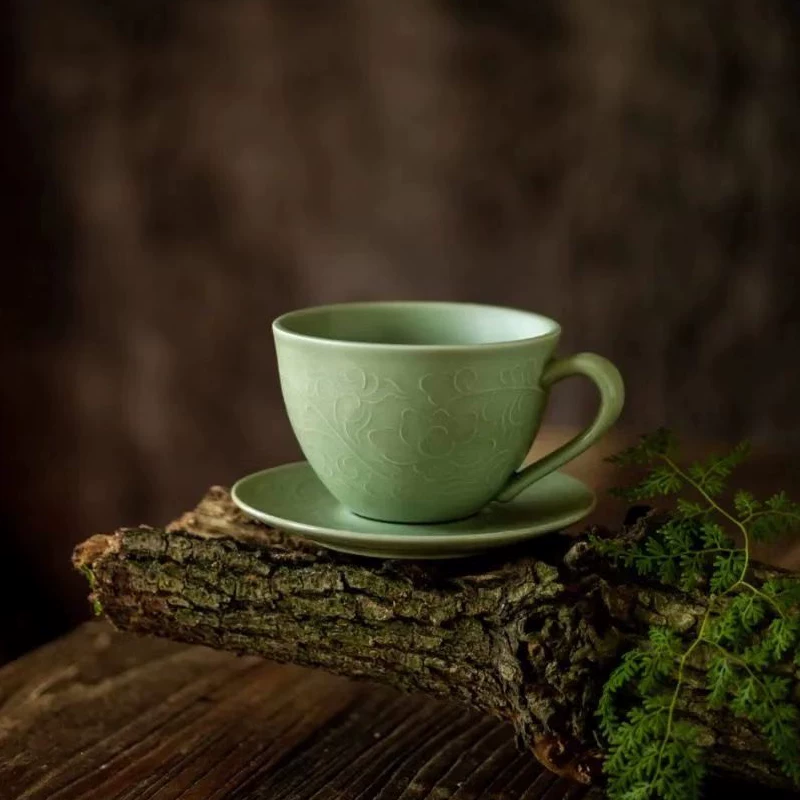
Celadon is a glaze language: its value comes from soft green tone, depth, and restraint rather than carved holes or inlaid shell.
Celadon ceramic cups should be understood through glaze. The surface may appear green, blue-green, olive, or jade-like depending on body, glaze, and firing, but the main experience is color depth and softness.
Britannica defines celadon as a greenish ceramic glaze used on stoneware and also used for the article so glazed. That distinction matters because a Celadon Glaze Ceramic Coffee Mug is not the same kind of craft as a rice-grain translucent cup. See Britannica’s celadon overview.
Celadon works well for tea and coffee because it does not compete with the drink or the table setting. The glaze adds atmosphere without turning the cup into a loud decorative object.
The Celadon Lotus Ceramic Coffee Mug uses the lotus motif to add quiet symbolism, while the Celadon Relief Ceramic Coffee Mug adds surface depth under the same green-glaze mood.
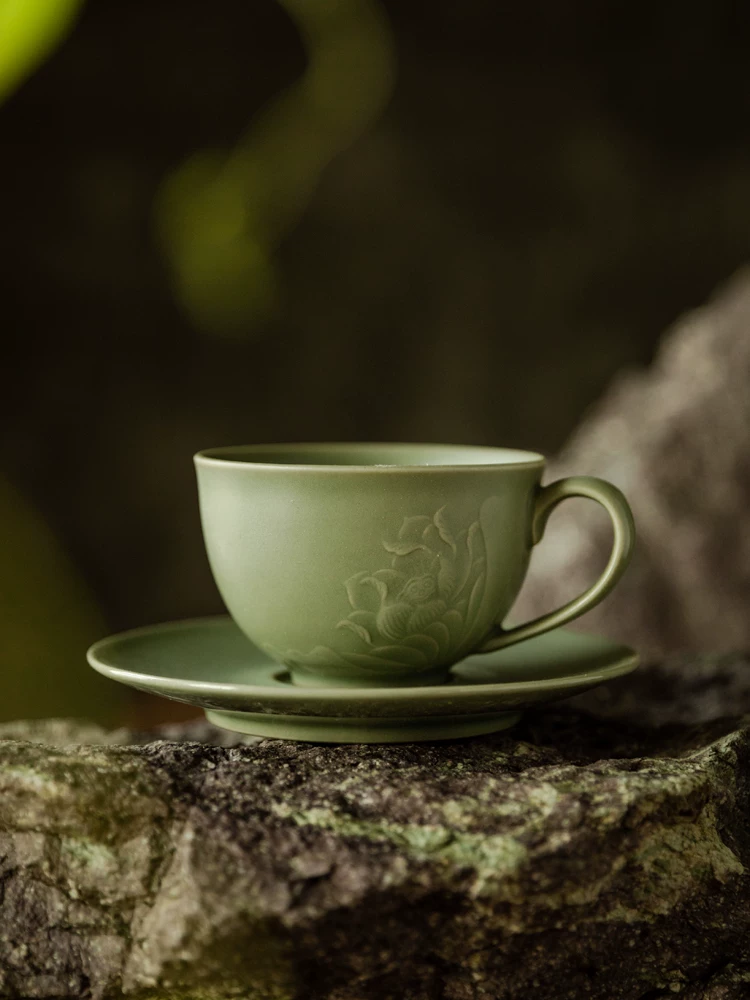
If your room already has strong color, celadon can act as a visual pause. If your room is mostly neutral, it becomes a soft green accent without feeling seasonal.
Choose a plain celadon glaze cup when you want maximum calm. Choose relief or lotus detail when you want texture, shadow, or a more symbolic surface.
For a broader comparison, read how to choose a ceramic cup by craft.