Subscribe to stay in-the-know
Enter your details to receive communications about our products and services, events, and cultural endeavours.
Mother-of-pearl inlay is not painted decoration. Its value comes from nacre: a shell material that shifts quietly with light and viewing angle.
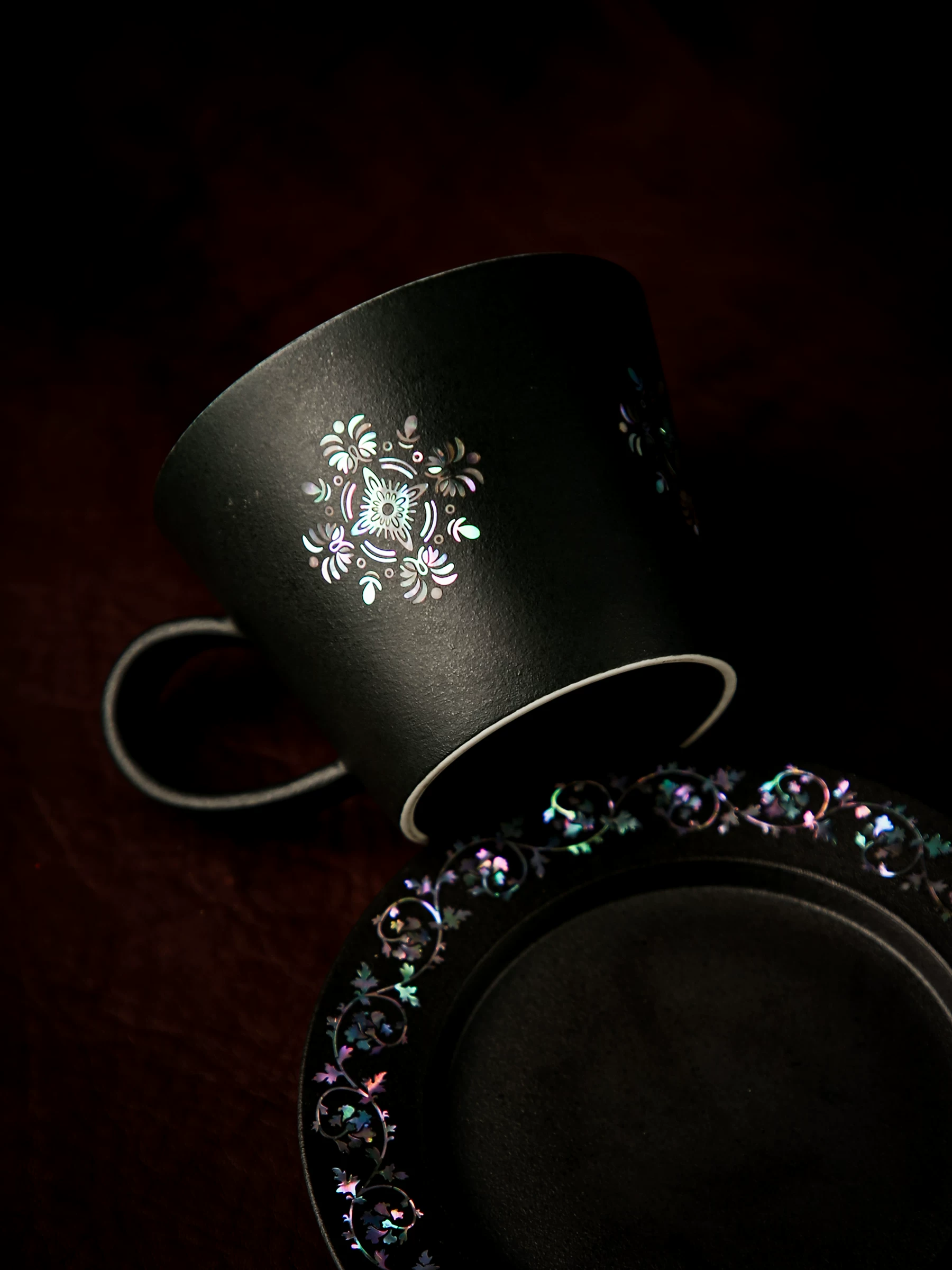
Mother-of-pearl inlay works best when it stays subtle: a small iridescent detail can make a ceramic cup feel special without making it loud.
Mother-of-pearl inlay uses nacre, the iridescent inner shell material associated with pearls. On a ceramic cup, it creates a controlled glimmer that changes as the object moves.
Britannica explains mother-of-pearl as nacre and notes its composition and long use in inlay. That material background helps explain why the Mother-of-Pearl Inlay Ceramic Coffee Mug reads differently from paint or glaze. See Britannica’s mother-of-pearl reference.
The best inlay is not about covering the cup with shine. It is about placing small light-catching details against a calm ceramic body, so the cup has a quiet ceremonial quality.
This makes mother-of-pearl especially suitable for gift settings, evening tea, or a curated shelf where light can catch the surface from the side.
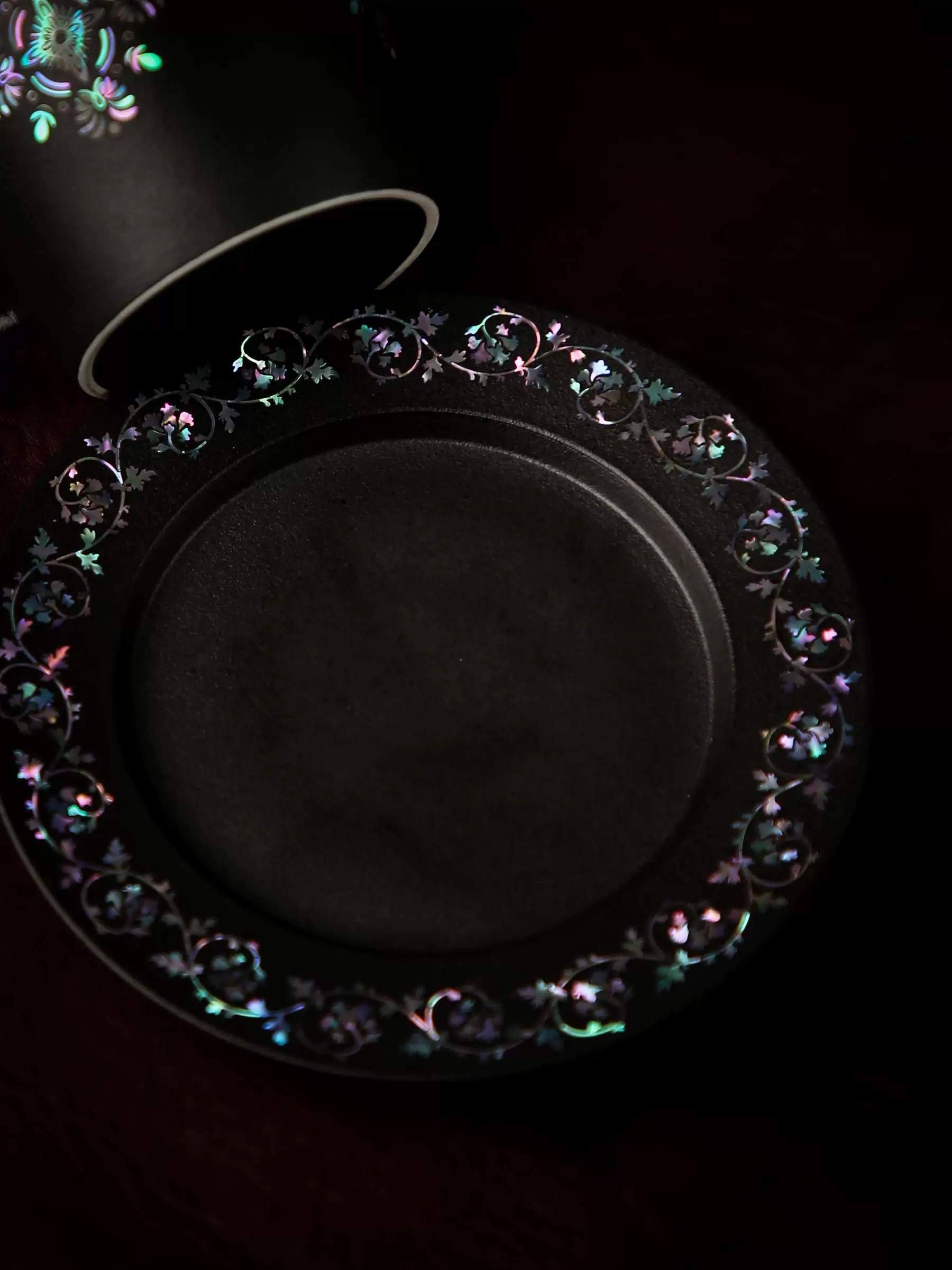
Keeping these craft categories separate helps a buyer understand what they are paying for: color, light-through effect, texture, or inlaid material.
Choose mother-of-pearl if you want a cup that feels more ceremonial or gift-ready than everyday-minimal. It suits tea, coffee, and special table settings where a small amount of iridescence feels intentional.
For a practical comparison with other cup crafts, use the ceramic cup craft guide.