Subscribe to stay in-the-know
Enter your details to receive communications about our products and services, events, and cultural endeavours.
A clear guide to silver tarnish, silver-tone jewelry details, and how to care for crystal bracelets with natural stone and aromatherapy features.
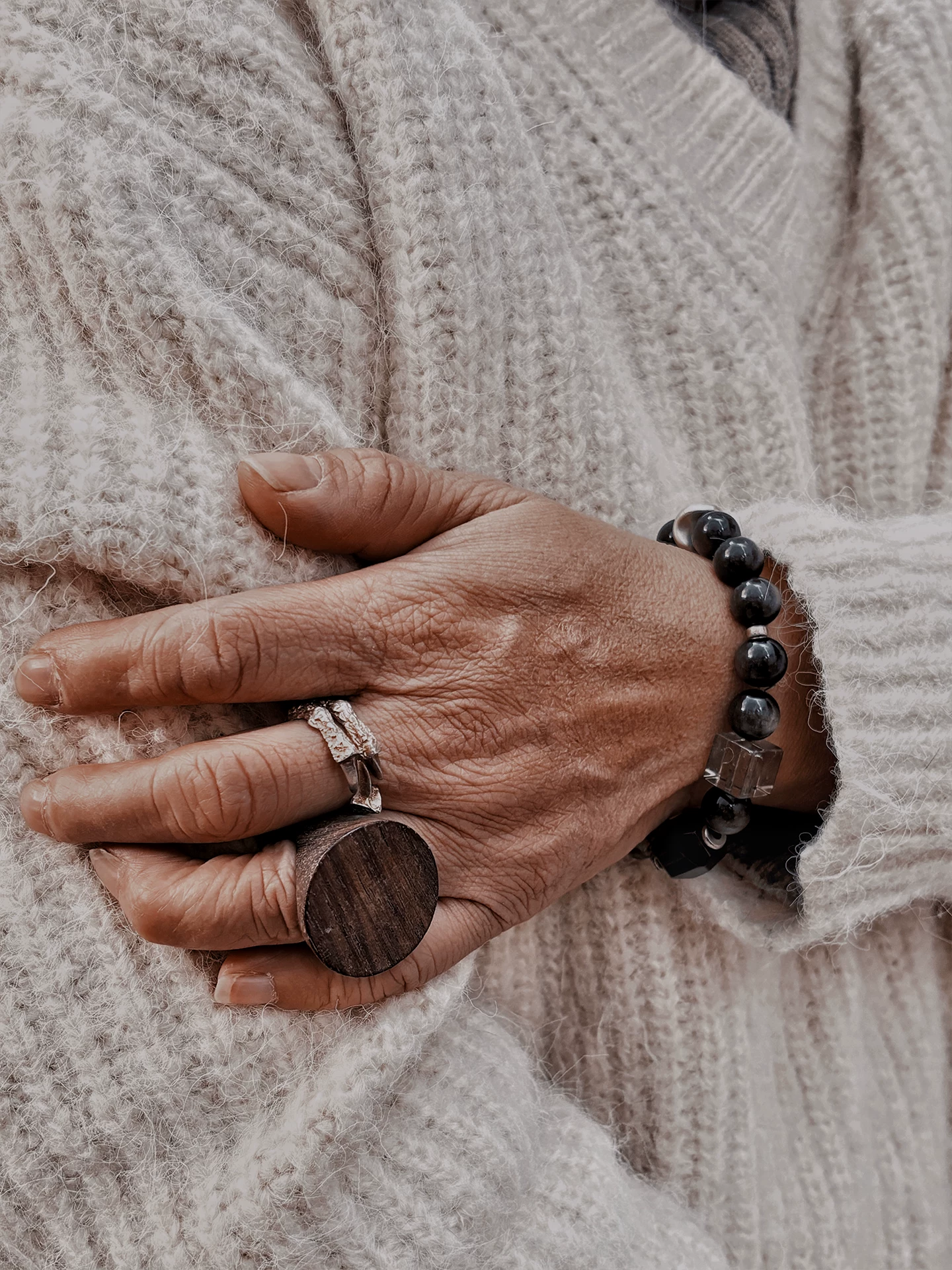
Key takeaway: Real silver can tarnish, but tarnish is a normal surface reaction, not the same as rust. Silver-tone details and silver sheen stones need gentler, material-aware care.
Yes, real silver can tarnish. Tarnish can make silver look yellow, grey, brown, or dark over time. It does not mean the piece is fake or ruined, and in many cases it can be slowed with dry storage and gentle cleaning.
This guide is written for people comparing silver jewelry, silver-tone details, and crystal jewelry with names such as silver sheen obsidian. The words can sound similar, but the materials behave very differently.
Silver tarnish usually appears when silver reacts with sulfur compounds in the air, moisture, sweat, perfume, lotion, or household chemicals. The surface develops a darker layer, which changes how light reflects from the metal.
This is why a silver piece may look bright when new, then slowly turn warmer, duller, or darker after repeated wear. Tarnish is especially common when jewelry is stored in humid spaces, worn during exercise, or placed near cosmetics and fragrance products.
The important point is simple: tarnish is a surface change. It is not the same as corrosion eating through the material, and it is not a reliable sign that the jewelry is low quality. Even good silver can tarnish if exposed to the wrong environment for long enough.
No. Real silver does not rust in the way iron or steel rusts. Rust is iron oxide, so it happens to iron-based metals. Silver can tarnish, darken, or lose brightness, but that is a different process.
For shoppers, this distinction matters. If you see orange-red flaky rust on a piece described as silver, the issue may involve another metal component, plating damage, or a base metal underneath. If you see grey or black surface darkening, that is more likely tarnish.
Not every silver-colored object is made from the same material. The care method depends on what you are actually wearing.
This is why a product name should be read carefully. In a bracelet such as the Silver Sheen Obsidian and Smoky Quartz Aromatherapy Bracelet, the word silver describes the luminous effect in the obsidian, not a claim that the main bead material is silver metal.
Jewelry stays brighter when it is kept dry, clean, and away from chemical exposure. This is true for silver jewelry, silver-tone components, and many crystal bracelets with metal spacers or decorative findings.
For crystal bracelets, care is not only about metal. Natural stone beads can also collect skin oil, dust, or fragrance residue. If your bracelet includes an aromatherapy injection feature, keep essential oil use controlled and wipe the surface clean after filling.
The Ginkgoods Jewelry collection focuses on crystal bracelets designed for daily rituals, including injection-based aromatherapy. These pieces are closer to personal ritual objects than conventional silver jewelry, so the care logic is slightly different.
The Citrine Essential Oil Crystal Bracelet is chosen for warm color and symbolic brightness. The White Crystal Essential Oil Bracelet is brighter and more minimal. The Silver Sheen Obsidian and Smoky Quartz Bracelet has a darker, more grounded look.
None of these should be judged only by whether they look like metal jewelry. Their value comes from the stone, the hand feel, the fit, the subtle scent ritual, and the way the bracelet becomes part of daily attention.
Normal tarnish usually appears gradually and evenly on exposed metal surfaces. A quality problem is more likely if you see sharp flaking, peeling, green staining, rough corrosion, or a sudden color change after one brief contact with water.
If you are unsure, avoid harsh cleaners first. Strong polishing chemicals can damage plating, stone surfaces, elastic cord, or glued details. Start with the least aggressive method: a soft dry cloth, dry storage, and gentle handling.
Yes, it can. Daily wear exposes silver to sweat, moisture, lotion, and air. Regular wiping and dry storage can slow the process.
No. Tarnish can happen to real silver. It is a normal surface reaction, not proof that the piece is fake.
No. Silver sheen obsidian is a stone name. The silver-like effect comes from reflective structures within the obsidian, not from silver metal.
Not exactly. Crystal bracelets may include stone beads, elastic cord, scent features, or decorative hardware. Use gentle dry care first, and avoid soaking unless the product care instructions clearly allow it.
Real silver can tarnish, but tarnish is manageable. Silver-tone details need gentler handling because their surface finish may be more delicate. Silver sheen obsidian is a different material altogether: a dark stone valued for its natural reflective glow.
If you are choosing jewelry for daily ritual rather than formal display, look beyond shine alone. Consider material, fit, comfort, scent use, and how the object will live with you over time.
Related reading: silver sheen obsidian and crystal meanings, crystal bracelet care guide, crystal bracelet size guide, and natural crystal vs glass beads.