Subscribe to stay in-the-know
Enter your details to receive communications about our products and services, events, and cultural endeavours.
A practical care guide for crystal bracelets, including how to reduce stretching, avoid oil residue, protect beads, and wear aromatherapy jewelry with less damage.
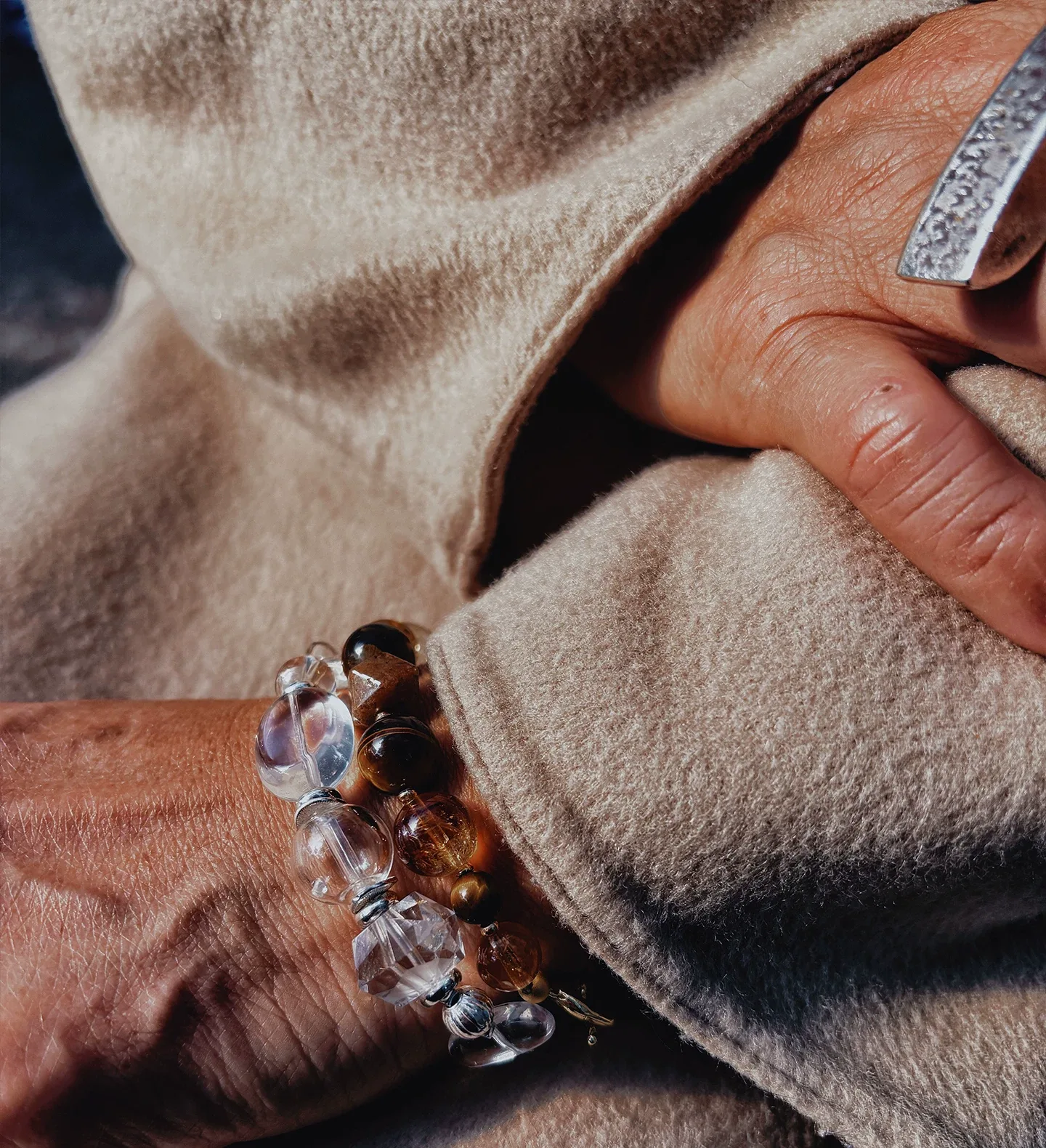
Key takeaway: Crystal bracelets last longer when they are put on gently, kept away from soaking water, used with only small amounts of oil, and stored dry when not being worn.
Crystal bracelets are made for daily wear, but they are still jewelry. Beads, elastic, cord, metal details, and aromatherapy components can all wear down faster when exposed to pulling, water, heavy oil, lotions, sweat, or rough storage.
This care guide focuses on practical problems buyers often worry about: stretching, broken cord, oil residue, skin contact, and how to keep a bracelet looking refined after repeated wear.
The easiest way to damage a beaded bracelet is to pull it too aggressively over the hand. Even strong elastic or cord can weaken when stretched sharply again and again.
Many crystals can tolerate normal contact with air and skin, but repeated soaking is not good for the full bracelet structure. Water can affect cord, elastic, metal components, and any aromatherapy function.
For injection-based aromatherapy bracelets, less oil is better. The scent should be close-wearing and subtle. Using too much oil may cause residue, stronger-than-expected scent, or contact with clothing.
Aromatherapy jewelry should feel refined, not messy. If you notice oil on the outside of the bracelet, clean it gently before wearing.
Natural crystal beads may show variations in color, internal texture, or surface character. These details are part of the material, but the beads should still be protected from harsh impact.
When not in use, store the bracelet in a dry place away from direct sunlight and heavy humidity. A soft pouch, jewelry tray, or separate compartment helps protect the beads from scratches.
If the bracelet has been used with essential oil, make sure the exterior is dry before storing it. This helps reduce residue transfer to fabric, paper, or other jewelry.
For fit-related questions, contact us with your wrist measurement. For current Ginkgoods aromatherapy crystal bracelets, wrist sizes up to 18.5 cm can be adjusted on request, while larger adjustments may require confirmation before ordering.
Darker bracelets can be easier to style daily, but they should still be wiped clean after oil use to avoid residue on cuffs or sleeves.
Recommended piece: Aromatherapy Crystal Bracelet in Silver Sheen Obsidian & Smoky Quartz
Warm-toned crystal bracelets look best when kept away from heavy fragrance oils, lotions, and colored residue that may dull the surface over time.
Recommended piece: Citrine Essential Oil Crystal Bracelet for Abundance Rituals
Clear and light-toned stones show residue more easily, so careful wiping and dry storage are especially important.
Recommended piece: White Crystal Essential Oil Bracelet for Guardian Energy
Yes, but daily wear should be gentle. Remove the bracelet before water exposure, heavy exercise, or activities that may pull or strike the beads.
Repeated pulling, tight fit, water exposure, and rough removal can weaken elastic or cord over time. A comfortable fit and gentle handling help reduce stretching.
It can if too much oil is used or if the exterior is not wiped before wearing. Use a small amount, let it settle, and clean the outside before putting the bracelet on.
A crystal bracelet should support daily ritual, not require complicated maintenance. Gentle handling, careful oil use, and dry storage are enough to protect most pieces through regular wear.
A crystal bracelet care guide should keep maintenance simple: use oil carefully, avoid soaking, store the bracelet dry, and handle beads gently. Related reading: real silver tarnish and silver-tone care, crystal bracelet size guide, and natural crystal vs glass beads.
For wider reference, see Britannica overview of quartz.