Subscribe to stay in-the-know
Enter your details to receive communications about our products and services, events, and cultural endeavours.
A reflective essay on Atlantis, crystal symbolism, and why small objects can carry old ideas of courage, wisdom, and poetic living.
Key idea: Crystal meaning is not only about mineral beauty but also often about a way to speak about memory, wisdom, courage, and the desire to live with more attention.
Plato did not write a crystal shopping guide, and Atlantis should not be treated as confirmed archaeology. Yet the story he left behind gave later readers a powerful stage on which to imagine lost civilizations, luminous objects, and the strange human desire to place meaning inside matter.
This essay begins with the old Atlantis story, then follows the cultural afterlife of crystal as a symbol. The point is not to prove a legend. The point is to understand why a small stone in the hand can still feel connected to wisdom, courage, and poetic living.
The story of Atlantis appears in Plato’s dialogues Timaeus and Critias. In those texts, Atlantis is described as an ancient and powerful island civilization that once challenged the wider world. It is wealthy, ambitious, technically impressive, and politically dangerous.
Crystal does not sit at the center of Plato’s original Atlantis account in the way modern myth often suggests. The association between Atlantis and crystal belongs mostly to later cultural imagination: fiction, cinema, esoteric writing, fantasy world-building, and modern visual culture.
In those later retellings, crystal often appears as a source of light, energy, memory, or authority. It becomes the glowing heart of a lost civilization. Think of the way fantasy films and oceanic myths use luminous stones, sacred weapons, and radiant artifacts to make power visible. A crystal does what ordinary language sometimes cannot: it lets mystery shine.
This is why crystal feels so natural inside the Atlantis myth. A transparent or reflective stone seems to hold light without fully giving away its secret. It is solid, but it feels almost immaterial. It belongs to the earth, yet it looks as if it remembers the sky or the sea.
To call it “Plato’s stone” is not to claim that Plato named a particular crystal. It is a metaphor for the way an object can carry philosophical weight. A stone can become more than decoration when it helps us think about clarity, restraint, courage, or the inner life.
Plato’s Atlantis gives us a dramatic contrast: brilliance without moral discipline collapses; power without wisdom becomes unstable. When later imagination places crystal inside that world, the stone becomes a vessel for the same question: what kind of light is worth keeping?
A crystal can be read as brightness, but also as responsibility. It can suggest knowledge, but also temptation. It can invite calm reflection, yet also remind us that beauty alone is not enough.
A generous way to read the Atlantis story is through courage and wisdom. That interpretation works well for a modern audience, as long as it remains symbolic rather than exaggerated. Crystal becomes meaningful not because it promises supernatural certainty, but because it gives abstract values a physical form.
This is close to how many people use meaningful objects today. A bracelet, a cup, an incense holder, or a small stone on a desk may not change the world by itself. But it can mark a pause. It can help a person return to a thought, a vow, a memory, or a quieter version of themselves.
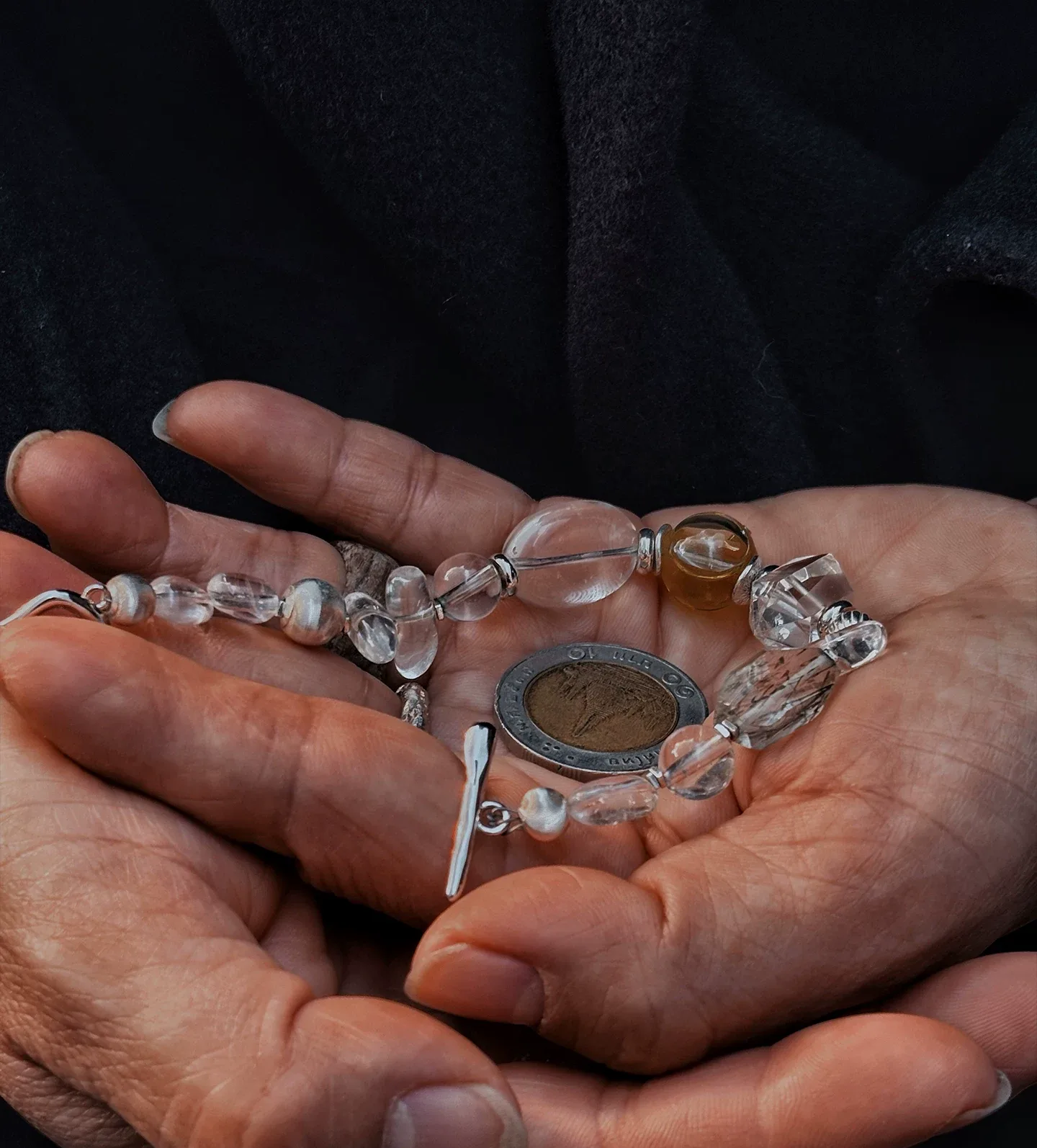
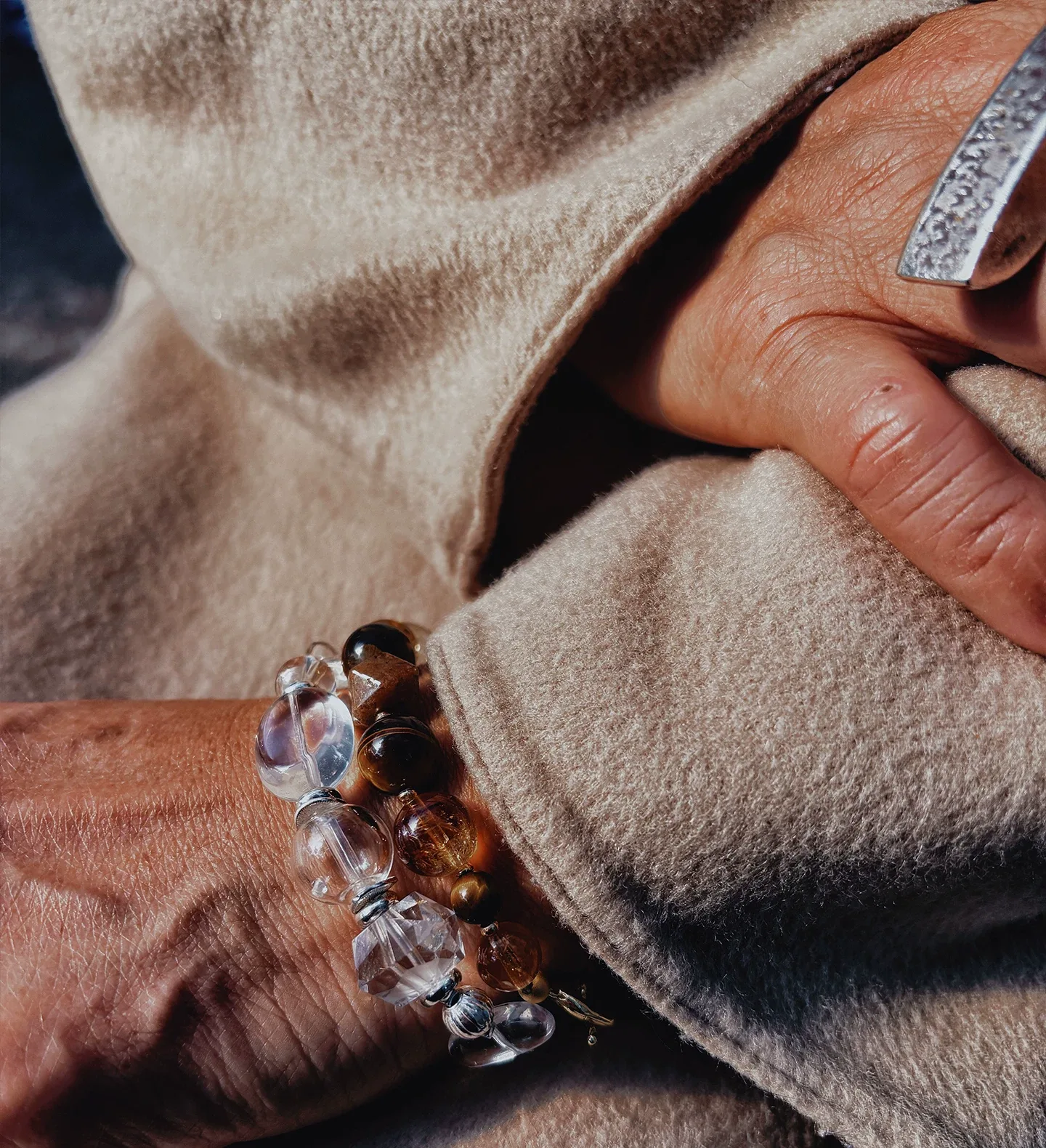
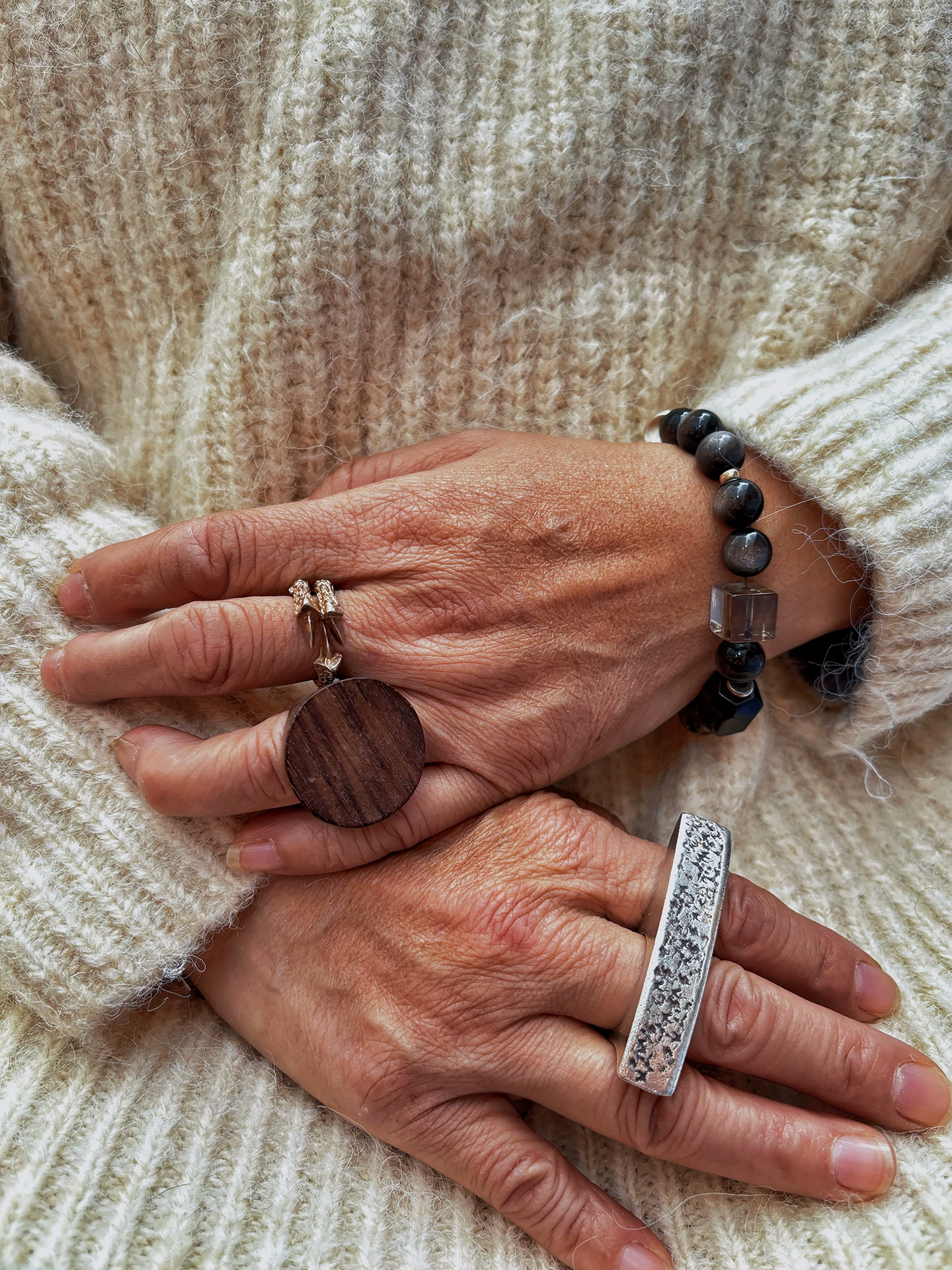
Within the Ginkgoods jewelry collection, this symbolic language appears in a quieter form. Silver sheen obsidian and smoky quartz create a darker, reflective mood. Citrine brings warmth and brightness. White crystal feels clearer and more minimal. These meanings should be approached as cultural and personal associations, not fixed promises.
The philosopher Martin Heidegger is often associated with the idea that human beings should dwell poetically on the earth. Whether we read that line through philosophy, craft, or daily ritual, it points toward a simple truth: life is not made only of function. We also need forms, textures, gestures, and symbols that help us notice where we are.
Atlantis has disappeared into story. Its exact location, if it ever had one, remains beyond certainty. But the poetry it released has not disappeared. It survives whenever a material object becomes a threshold between ordinary life and imagination.
A crystal bracelet does not need to be mythologized beyond recognition. It can simply be a small object with light, weight, texture, and personal meaning. When chosen with attention, it becomes less about escape and more about return: a return to courage, to wisdom, and to the quiet art of living more deliberately.
Related reading: silver sheen obsidian, citrine, and clear quartz meanings, aromatherapy jewelry as a daily ritual, and modern ritual objects and everyday attention.