Subscribe to stay in-the-know
Enter your details to receive communications about our products and services, events, and cultural endeavours.
How handmade dyeing builds colour through matter, restraint, variation, and the slow intelligence of cloth.
Plant-dyed cloth carries a different pace from fabric coloured for perfect repetition. Its tones come from matter that has first lived elsewhere: leaves, bark, tea, minerals, rust, water, time. Even before pattern enters the picture, the colour already belongs to a longer chain of transformation.
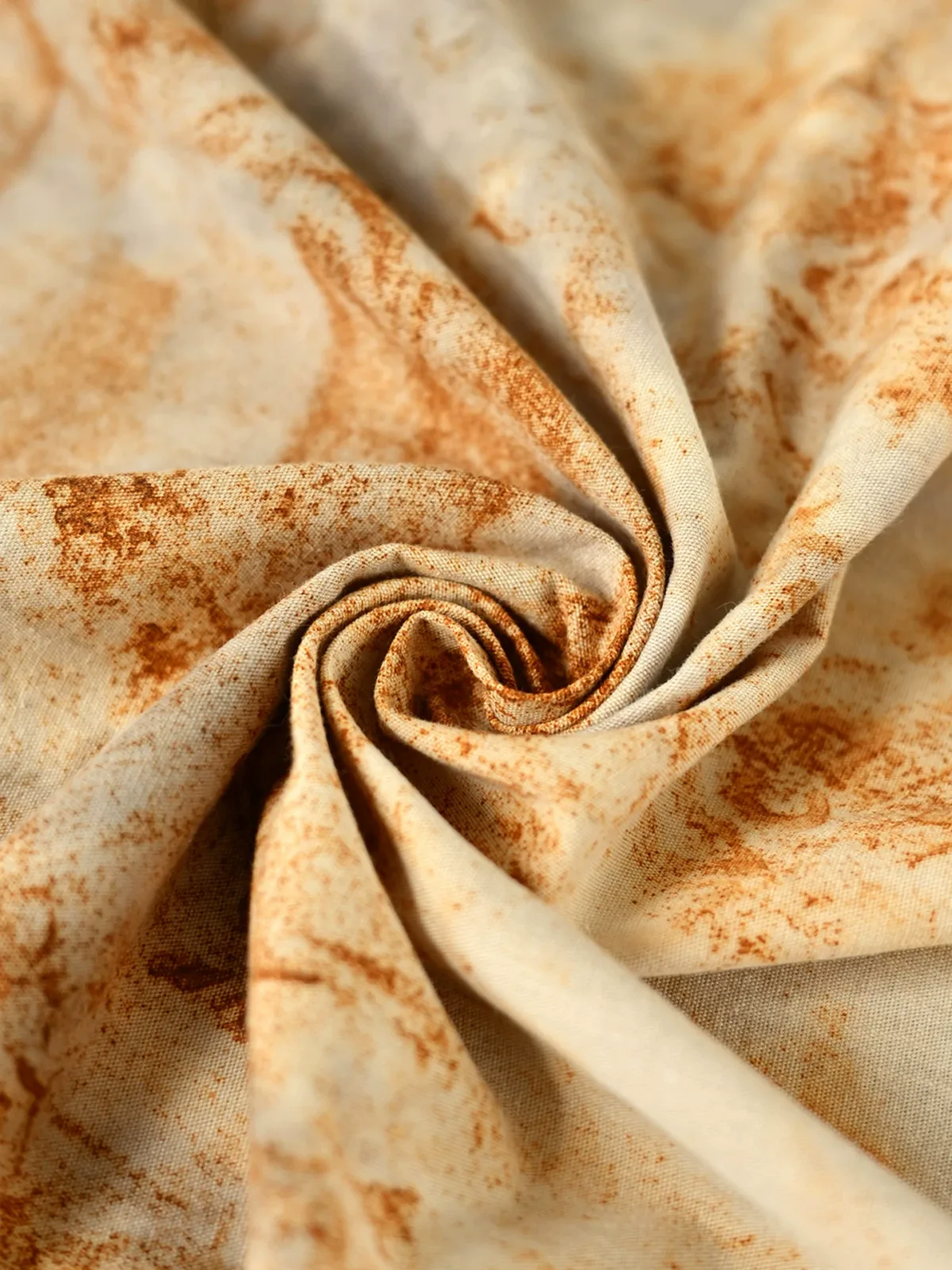
That is part of why handmade indigo and rust-dyed textiles feel so resonant in the home. They do not present colour as a flat industrial decision. They present it as something coaxed out of contact, absorption, oxidation, and patient repetition. The cloth remembers how it was made.
Indigo is often admired for its depth, but what makes it meaningful in craft is not blue alone. It is the way colour arrives gradually through repeated dipping and exposure. Rust and tea dyeing work differently, yet they share a similar truth: pigment is drawn from reaction, not instant surface coverage. The maker is not just applying a shade. They are staging an encounter between fibre and source.
Because the colour is built rather than printed, the result usually carries softness and variation even when the overall field is bold.
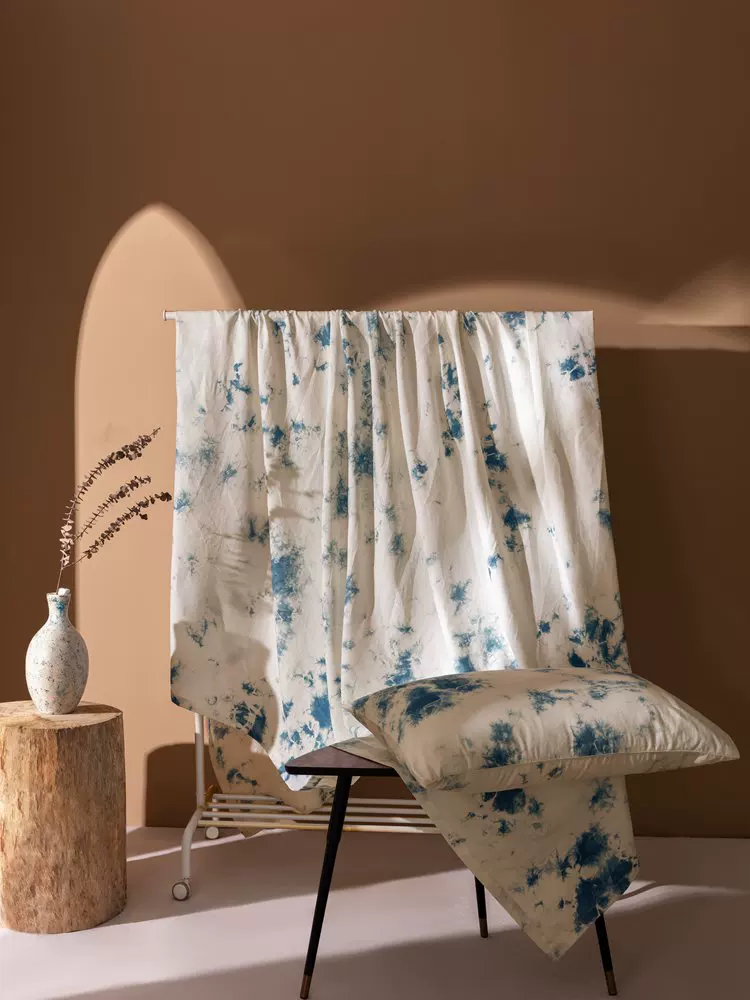
In cloud dyeing, tie-dye, and related resist methods, the pattern is made partly through withholding. Parts of the cloth are folded, bound, gathered, or protected so that dye reaches each area differently. The final image emerges through a sequence of concealment and release.
This gives handmade dyeing a distinctive poise. The pattern is not simply imposed on the fabric. It grows out of pressure, saturation, and the moment of unfolding, when the hidden structure finally becomes visible.
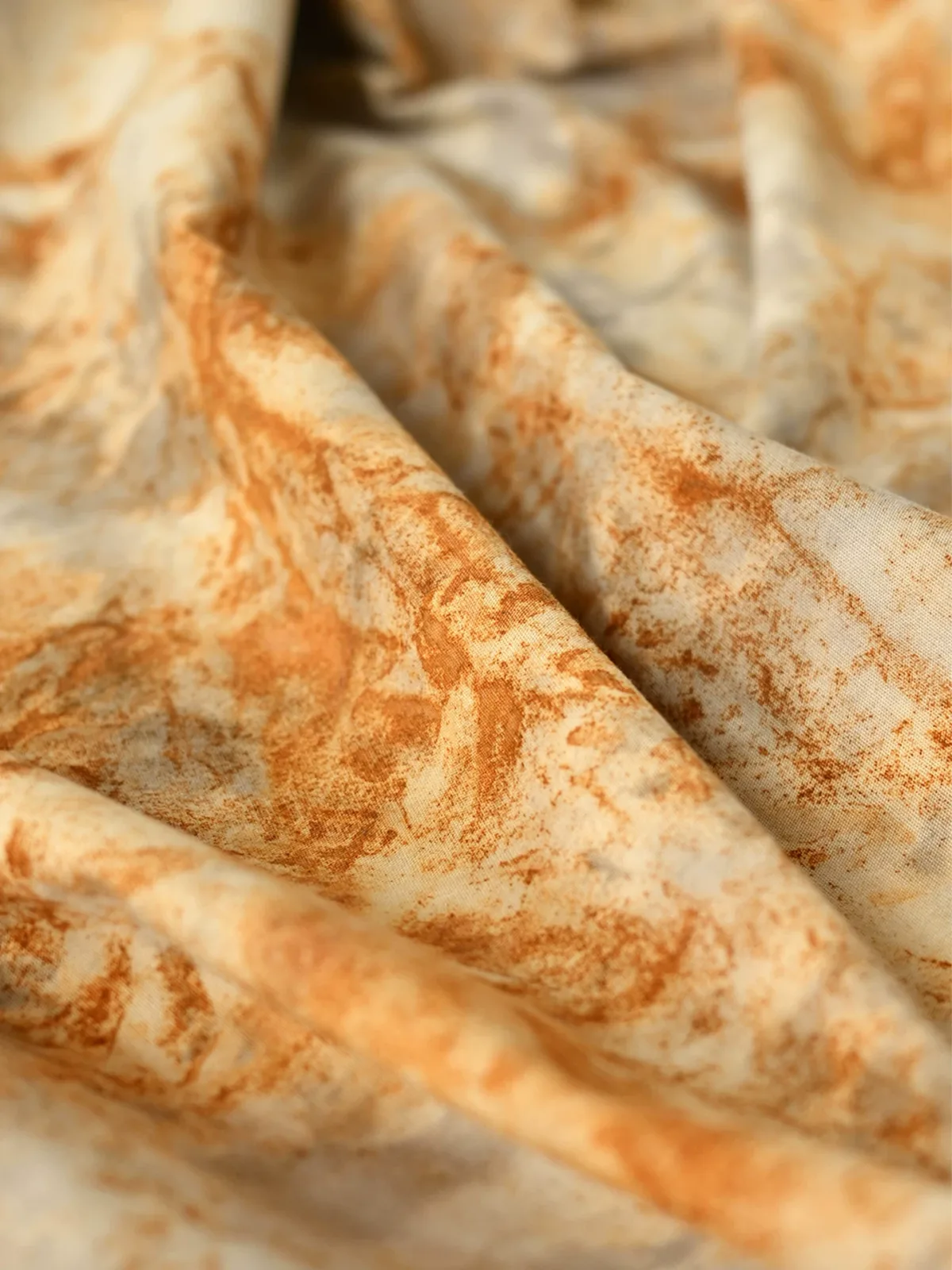
Plant dyeing should not be read by the standards of factory consistency. Slight shifts in tone, density, and edge softness are not signs that the process has failed. They are evidence that the fibre, the liquid, and the surrounding conditions have all been allowed to remain real.
This is exactly what gives handmade textiles dignity. The cloth does not pretend to be infinitely repeatable. It offers a pattern that is stable enough to live with, but alive enough to reward looking.
In plant-dyed cloth, variation is not noise. It is the record of contact between fibre, dye bath, air, and time.
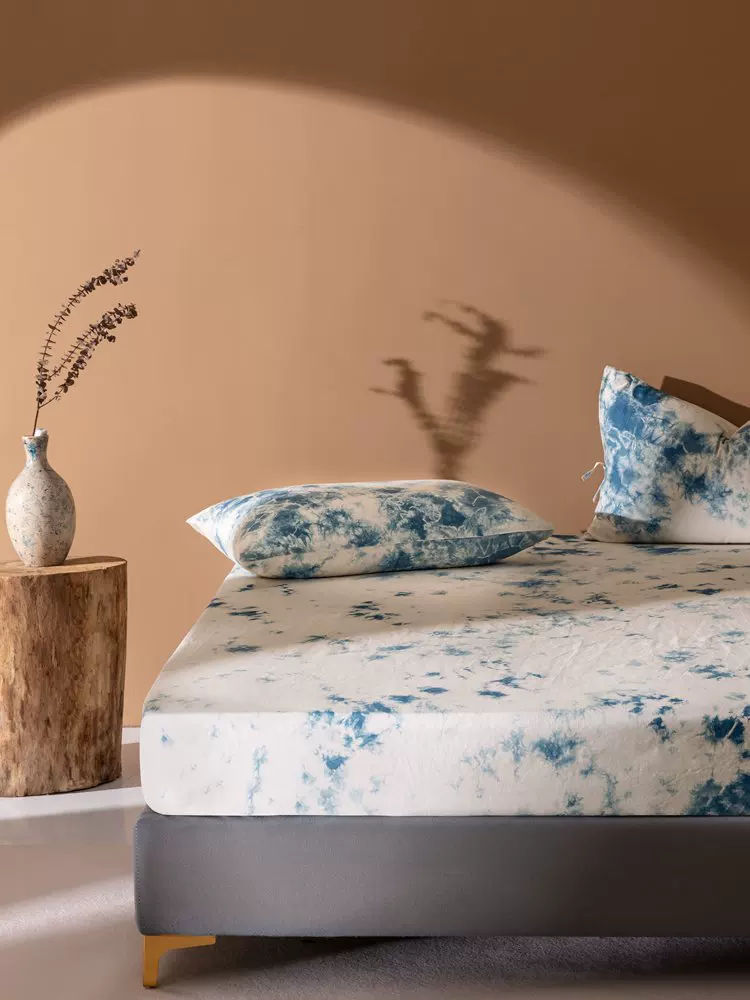
Another reason plant-dyed textiles remain compelling is the way they age. Use, washing, light, and handling do not simply damage the cloth; they continue the story of the surface. The fabric softens into ownership. Colour may mellow, but it often does so with grace rather than abruptness.
This makes such textiles especially suited to domestic life. They do not ask to remain untouched. They become more personal through use.
In an age of aggressively uniform fabric, plant-dyed cloth offers another idea of value: that a home can contain surfaces marked by process, season, and human pacing. Bedding, throws, and lengths of dyed cotton bring atmosphere not because they are loud, but because they are materially legible.
What you keep is more than colour. You keep a textile shaped by soaking, binding, dyeing, drying, and waiting — a piece of cloth that still carries the intelligence of making inside its surface. That is why these fabrics continue to feel contemporary even when the methods behind them are old.