Subscribe to stay in-the-know
Enter your details to receive communications about our products and services, events, and cultural endeavours.
A closer look at how heat, cooling, and mineral bloom give crystalline glaze its depth and unpredictability.
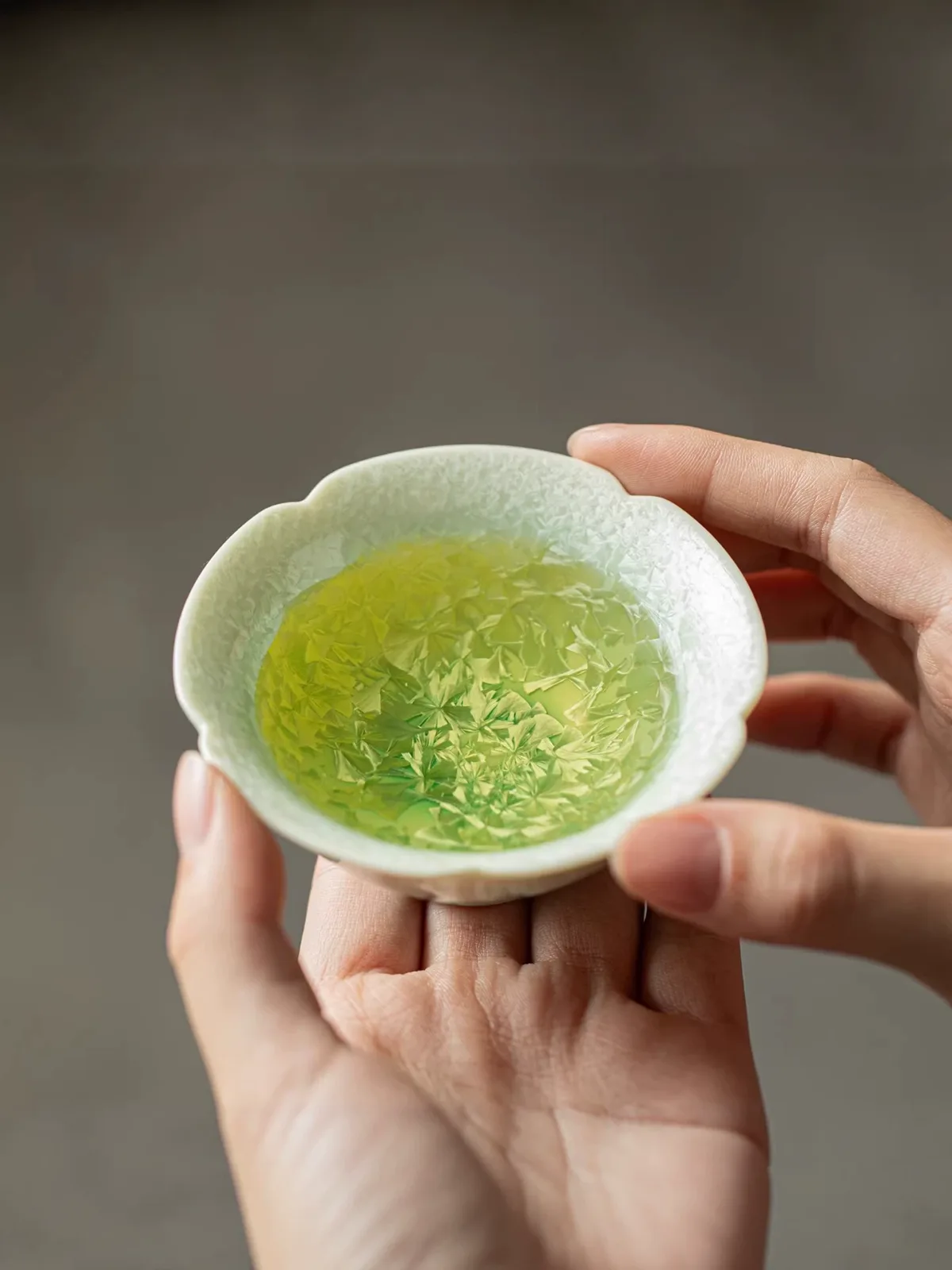
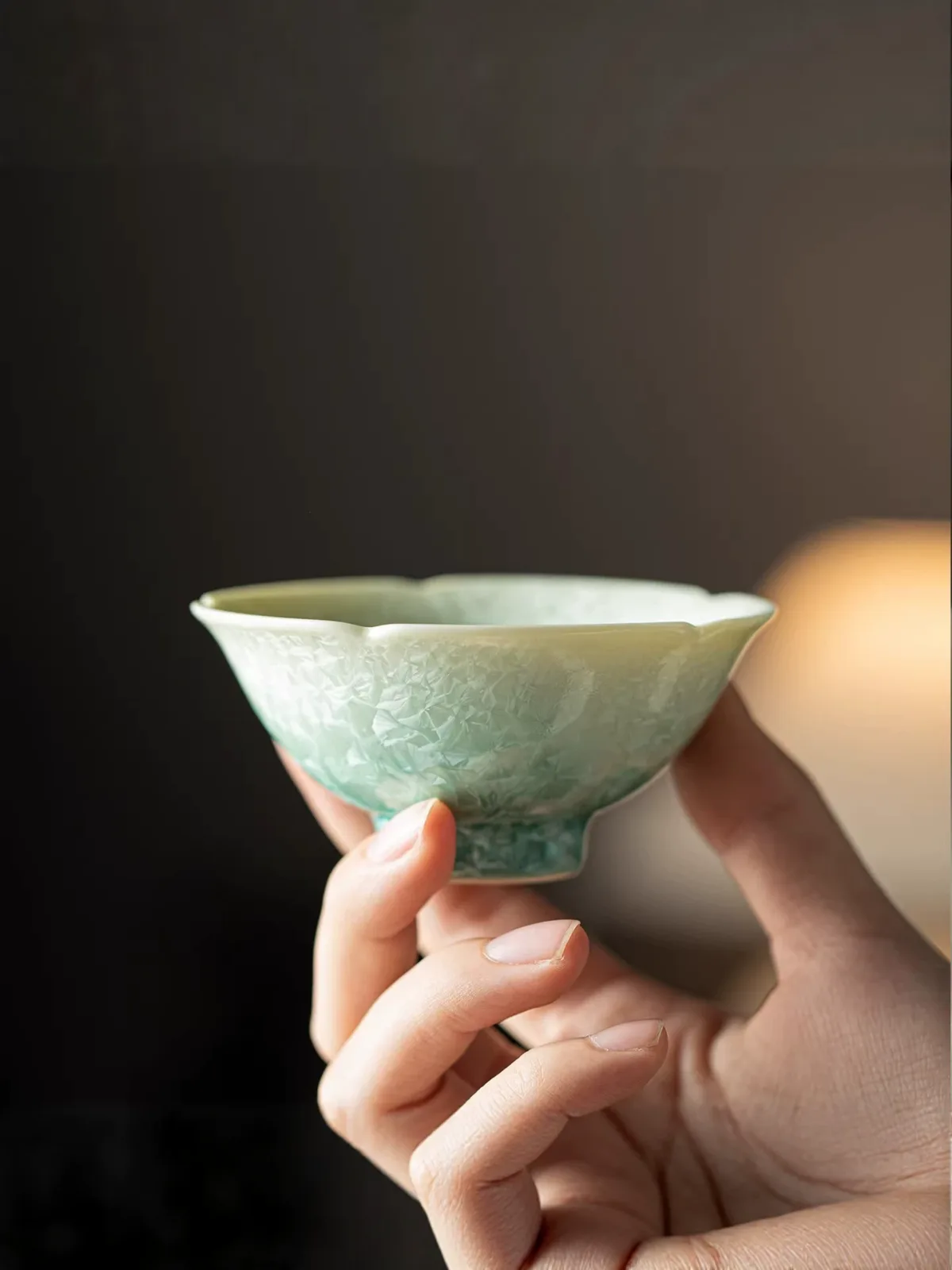
Crystalline glaze is one of the clearest reminders that ceramics are not only shaped by hand. They are also shaped by waiting, chemistry, and the long authority of the kiln. What appears on the finished surface is not painted in the usual sense. It emerges through heat, melt, and cooling, when mineral-rich glaze is coaxed into forming visible crystal patterns.
This makes crystalline glaze unusually compelling to live with. It feels controlled, yet never fully repeatable. Every cup carries evidence of process, not as roughness, but as atmosphere. The kiln leaves behind something that looks almost botanical, as if frost, blossom, and mineral bloom had met on clay.
Unlike flat, even glazes designed for strict uniformity, crystalline glaze is valued for internal formation. During the firing and cooling cycle, crystals develop inside the glaze layer and spread outward in soft radial structures. This is why the surface can seem to contain both depth and movement at once.
The result is not random decoration. It is a record of a controlled environment in which the glaze has been given enough time and the right thermal conditions to develop character visibly.
The kiln does not merely harden the piece. It stages transformation. The glaze has to melt, move, and then cool in a way that allows crystal structures to form instead of freezing too quickly. Small changes in temperature hold time can alter pattern size, density, and distribution.
That means the maker is working with a process that resists brute force. Recipes matter, but so do timing, observation, and memory. Even when the potter aims for a known family of results, the kiln still participates as an active agent, not a passive machine.
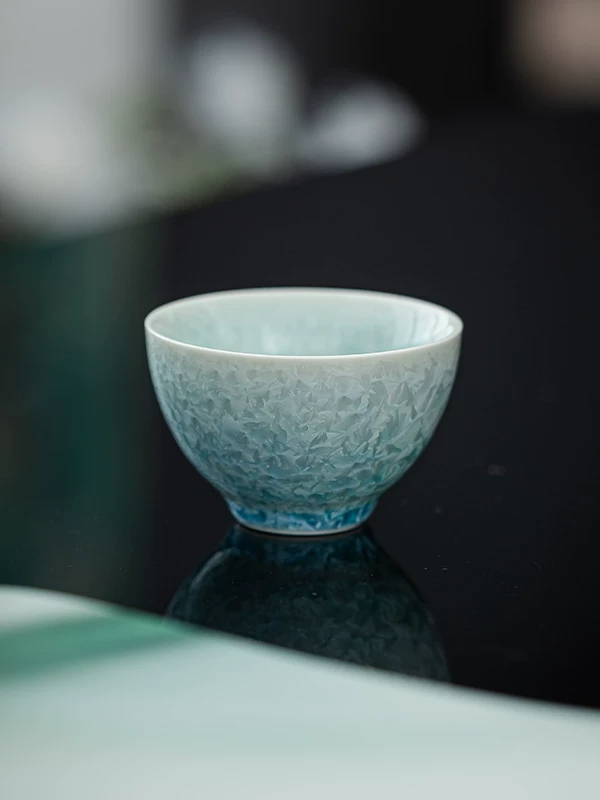
Because the process is sensitive, two crystalline glaze cups are never interesting in exactly the same way. One may carry larger blooms, another denser constellations, another a calmer field of colour with only a few strong points of crystallisation. These differences are not defects to be designed out. They are the very reason the technique feels alive.
In practical terms, this means reading the cup less like a factory-matched product and more like a finished event. Its particular balance of colour and crystal is the outcome you are actually collecting.
Crystalline glaze is convincing because it keeps a trace of uncertainty inside refinement.
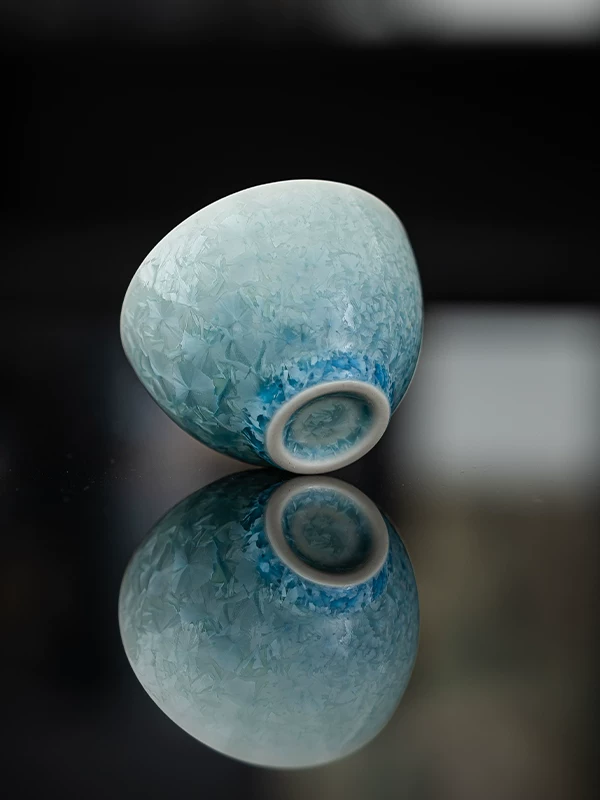
None of this means the maker simply accepts whatever happens. Crystalline glaze requires discipline at every earlier step: clay body compatibility, glaze mixing, application thickness, kiln scheduling, and the willingness to reject outcomes that fail in structure or balance. The apparent spontaneity of the finished surface rests on a great deal of preparation.
This is why successful pieces feel serene rather than chaotic. Risk is present, but it has been carried by technique.
A well-made crystalline glaze cup offers more than novelty. It changes with angle, light, steam, and use. Morning light draws one pattern forward; tea deepens another. The vessel keeps asking to be seen again.
That enduring interest is the quiet luxury of the technique. It does not depend on loud form. A simple teacup can hold enough complexity in the glaze alone. What you live with is not only a vessel, but a kiln record made intimate enough to fit in the hand.