Subscribe to stay in-the-know
Enter your details to receive communications about our products and services, events, and cultural endeavours.
Subscribe to stay in-the-know
Enter your details to receive communications about our products and services, events, and cultural endeavours.
Why Su embroidery remains one of the most refined forms of hand needlework, and how its quiet precision still speaks today.
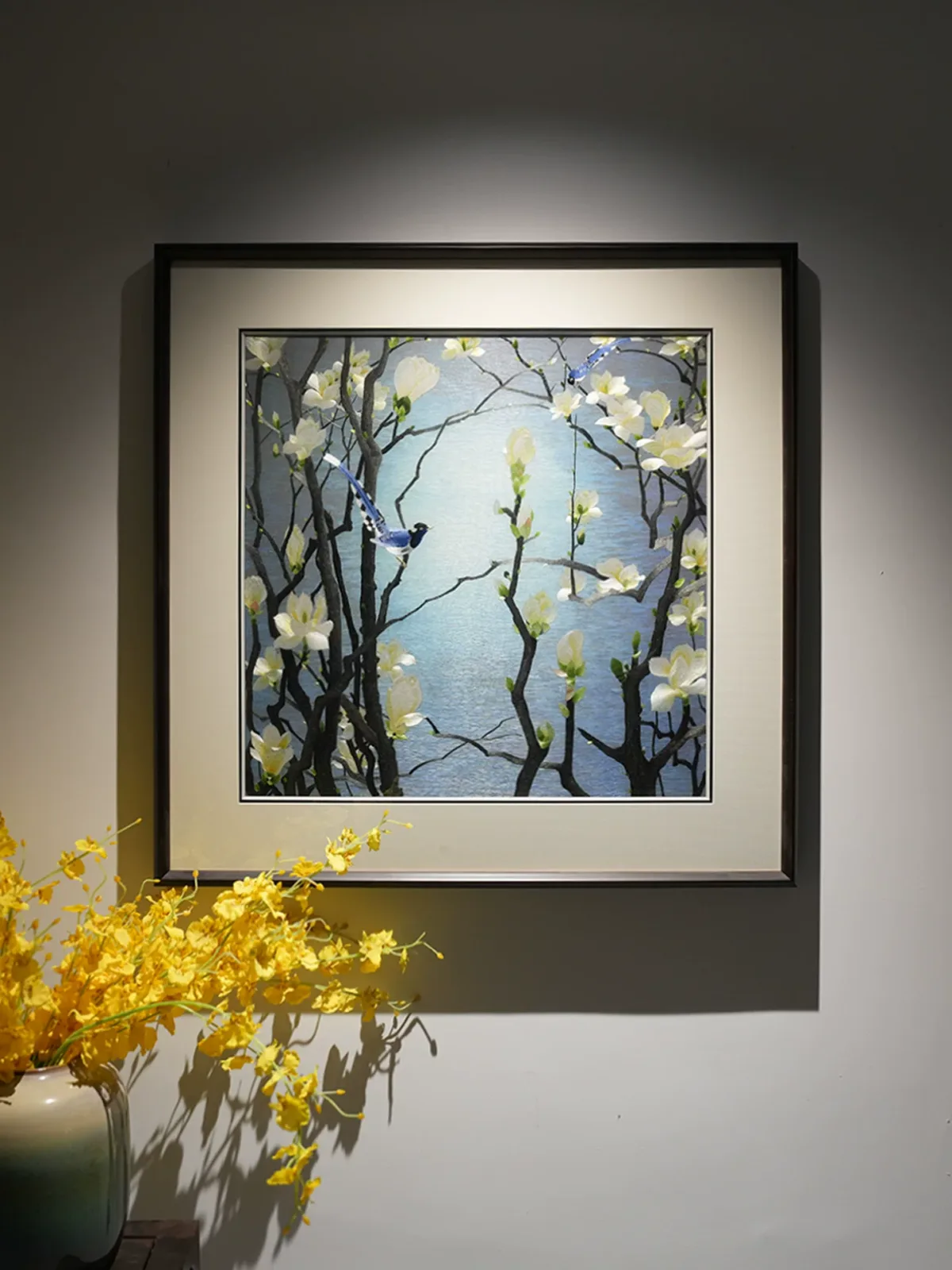
Suzhou embroidery is often praised for delicacy, but delicacy is only the surface impression. What gives Su embroidery its power is precision: the control of thread, the management of light across silk, and the ability to build image without weight. It belongs to a lineage of work in which refinement is measured not by excess, but by how little the hand seems to disturb the material.
That is why good Su embroidery can feel strangely quiet and exact at the same time. It borrows something from painting, but it never stops being thread. The image is not printed onto the surface. It is slowly assembled through decisions too fine to be hurried.
Among Chinese embroidery traditions, Su embroidery is known for fineness, clarity, and tonal subtlety. The surface does not rely on heaviness or thick relief. Instead, it draws the eye through transitions: small changes in direction, density, and hue that make the stitched image feel composed rather than merely decorative.
This refinement is why Su embroidery often feels closer to looking than to ornament. You do not only see the subject. You also begin to notice how carefully the surface has been calibrated to hold it.
Silk thread changes the work because it carries light differently from cotton or synthetic fibre. It can appear soft from one angle and bright from another. This makes the material extraordinarily expressive, but also unforgiving. Every inconsistency in direction or tension becomes visible.
The ground matters as well. Silk against silk creates a conversation of sheen, softness, and control. The maker is not only placing colour. They are managing reflection.
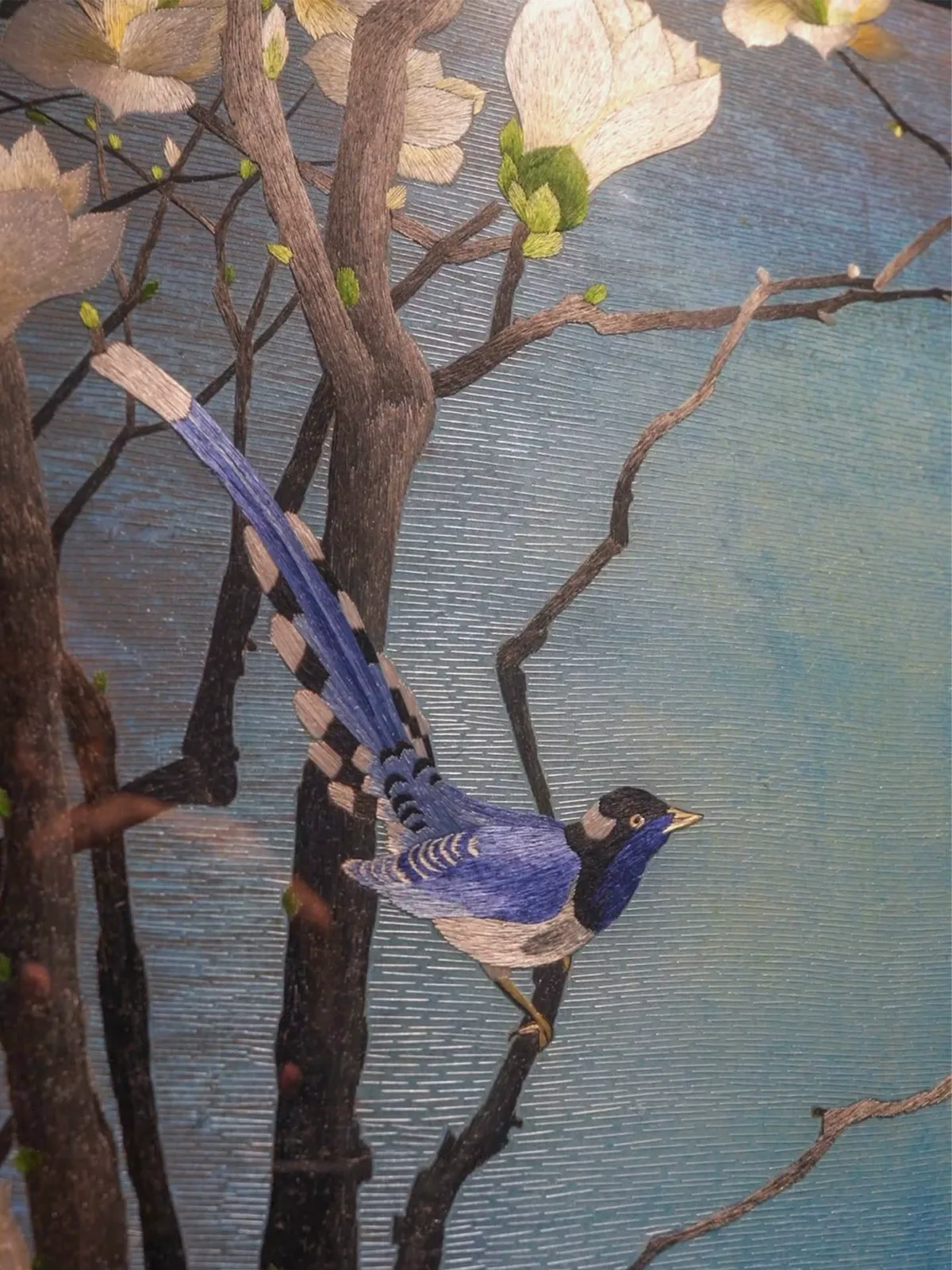
One of the most remarkable aspects of Su embroidery is the use of extremely fine split threads. This allows the maker to create subtle transitions in petal, leaf, mist, fur, feather, or shadow with extraordinary sensitivity. But such refinement demands control at a scale where carelessness becomes obvious immediately.
The result is a kind of visual quietness that can be mistaken for simplicity. In reality, it is often the outcome of many tiny, disciplined adjustments.
What looks effortless in Su embroidery is usually the evidence of many hours spent making thread behave with unusual exactness.
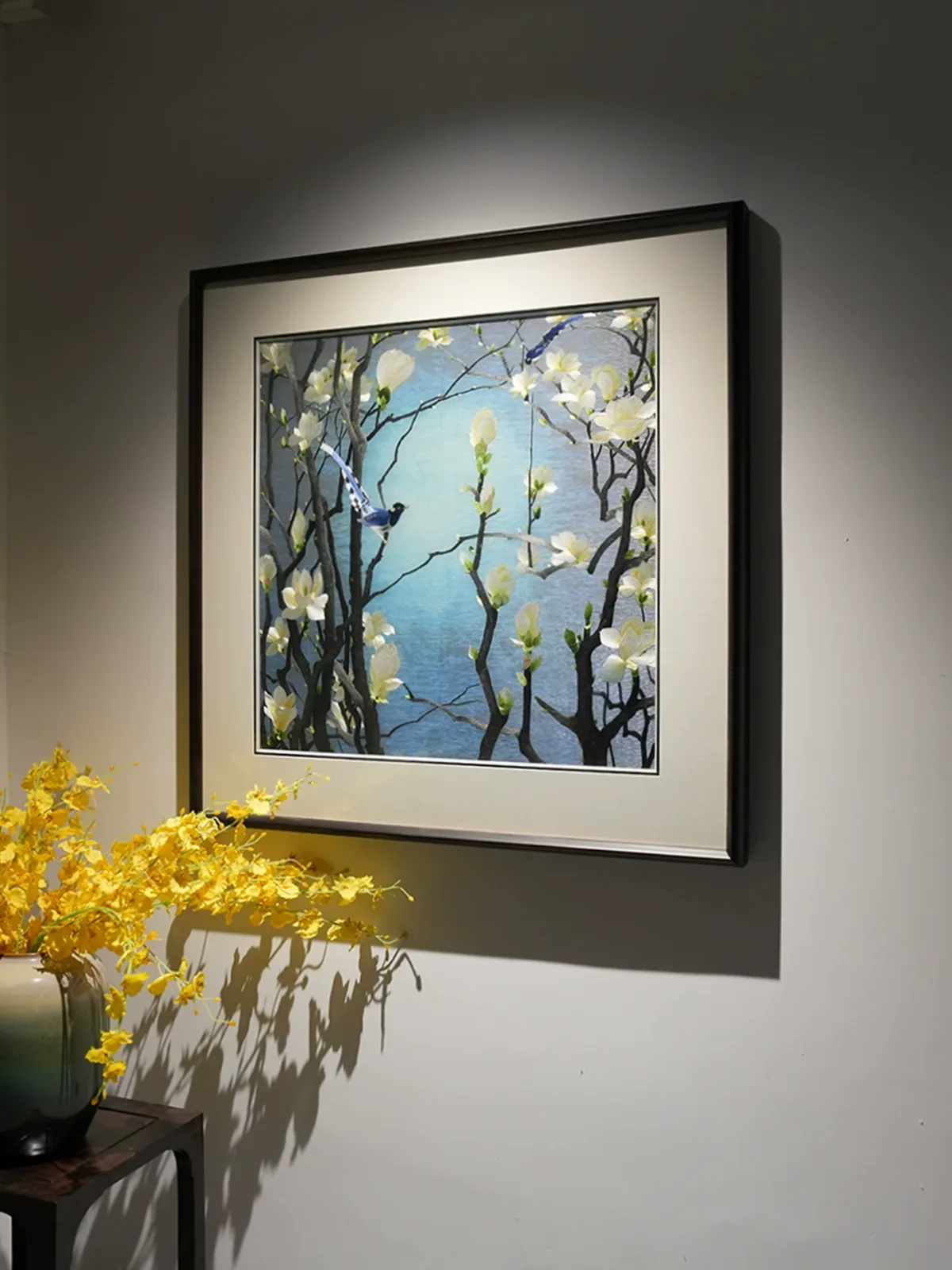
Suzhou embroidery is often compared to painting because it can achieve remarkable softness and image depth. Yet the comparison only goes so far. Thread behaves differently from brushwork. It has grain, tension, and directional bias. The artisan must compose with all of these in mind.
This is what makes the craft so compelling. The image is not merely represented. It is translated — from observation into thread, from colour into stitch, from stillness into a surface that remains tactile.
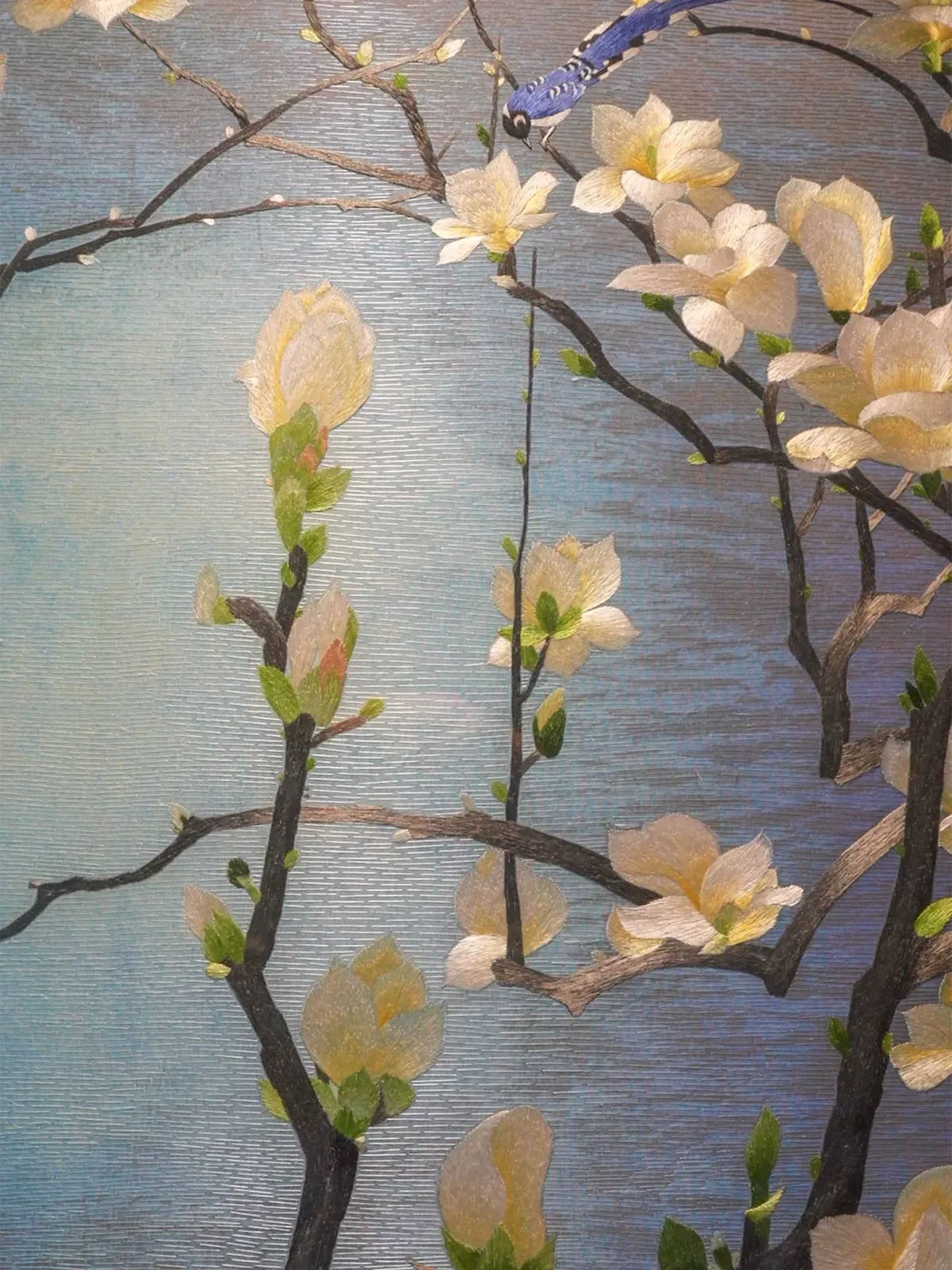
In a time when images are easy to reproduce and easier to discard, Su embroidery restores difficulty to beauty. It asks the viewer to value what cannot be scaled instantly: hand judgment, material intelligence, and the willingness to refine details most people will only notice slowly.
That is why it still matters in modern life. Not as a relic of refinement, but as evidence that refinement remains possible. A well-made embroidered work does not simply decorate a wall. It changes the quality of attention in the room.