Subscribe to stay in-the-know
Enter your details to receive communications about our products and services, events, and cultural endeavours.
Subscribe to stay in-the-know
Enter your details to receive communications about our products and services, events, and cultural endeavours.
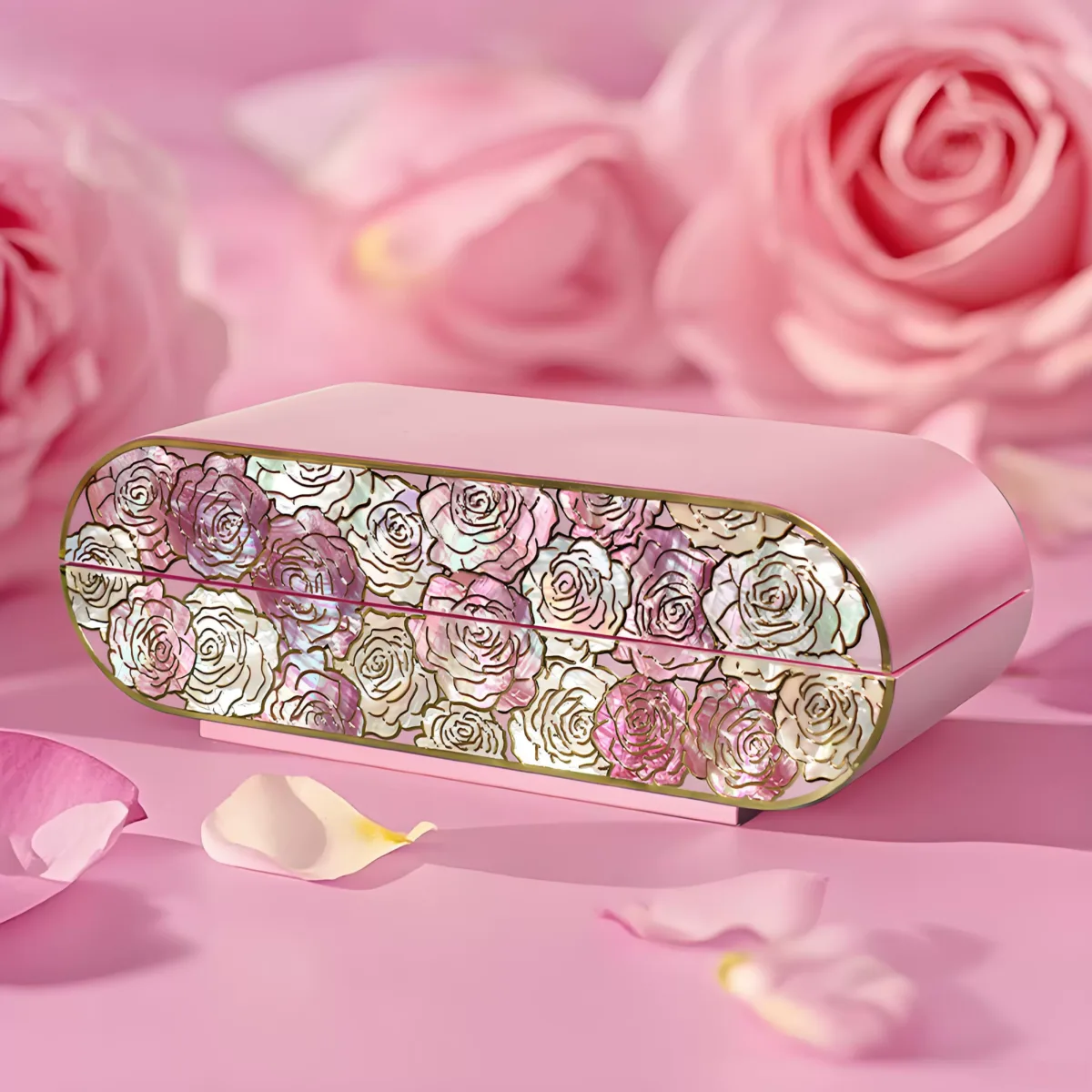
A quieter look at nacre, shell inlay, and why genuine mother of pearl still rewards close attention.
Mother of pearl is often treated as a decorative effect, as though its value were only visual. But nacre is not an effect added afterward. It is a material formed slowly in nature and then disciplined further by the hand of the artisan. Its beauty comes from structure, not from coating.
That distinction matters. Genuine mother of pearl never behaves like printed imitation or synthetic shine. It changes with angle, with light, and with the dark surface beside it. This is why inlaid shell continues to feel more alive than surfaces designed only to look polished.
Nacre has depth because it is layered from within. The shifting glow we associate with mother of pearl does not sit on top of the surface. It emerges from the material’s inner structure, which bends and returns light differently as the object moves.
This is why genuine shell feels quieter and more complex than imitation. It does not flash in one fixed way. It rewards looking from more than one angle.
Before shell can be inlaid, it has to be chosen with care. Thickness, tone, structural stability, and usable size all matter. Then it must be cut, thinned, and refined without dulling the very quality that makes it worth using.
This is one reason inlaid shell work remains demanding. The artisan is working with a material that can be luminous and fragile at the same time.
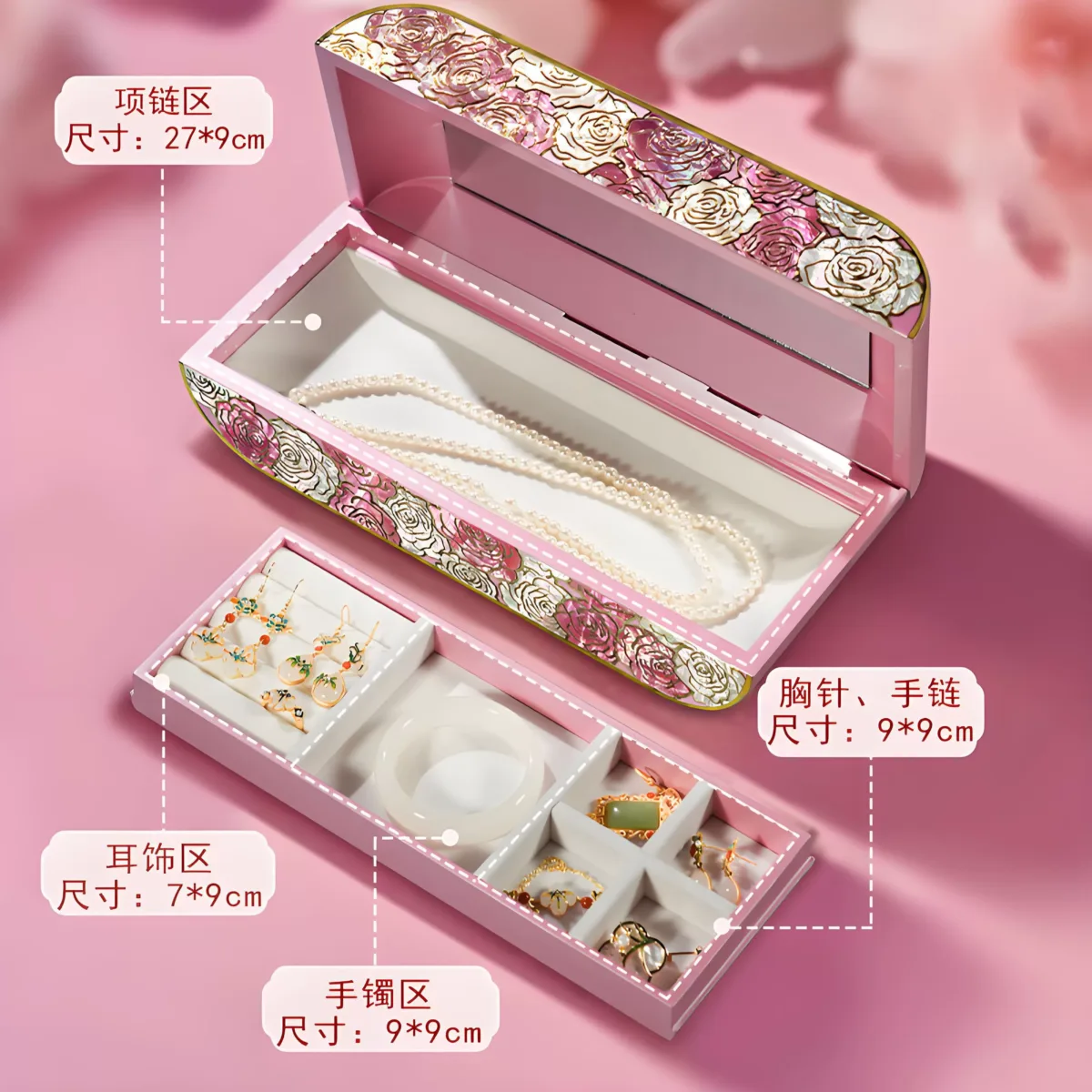
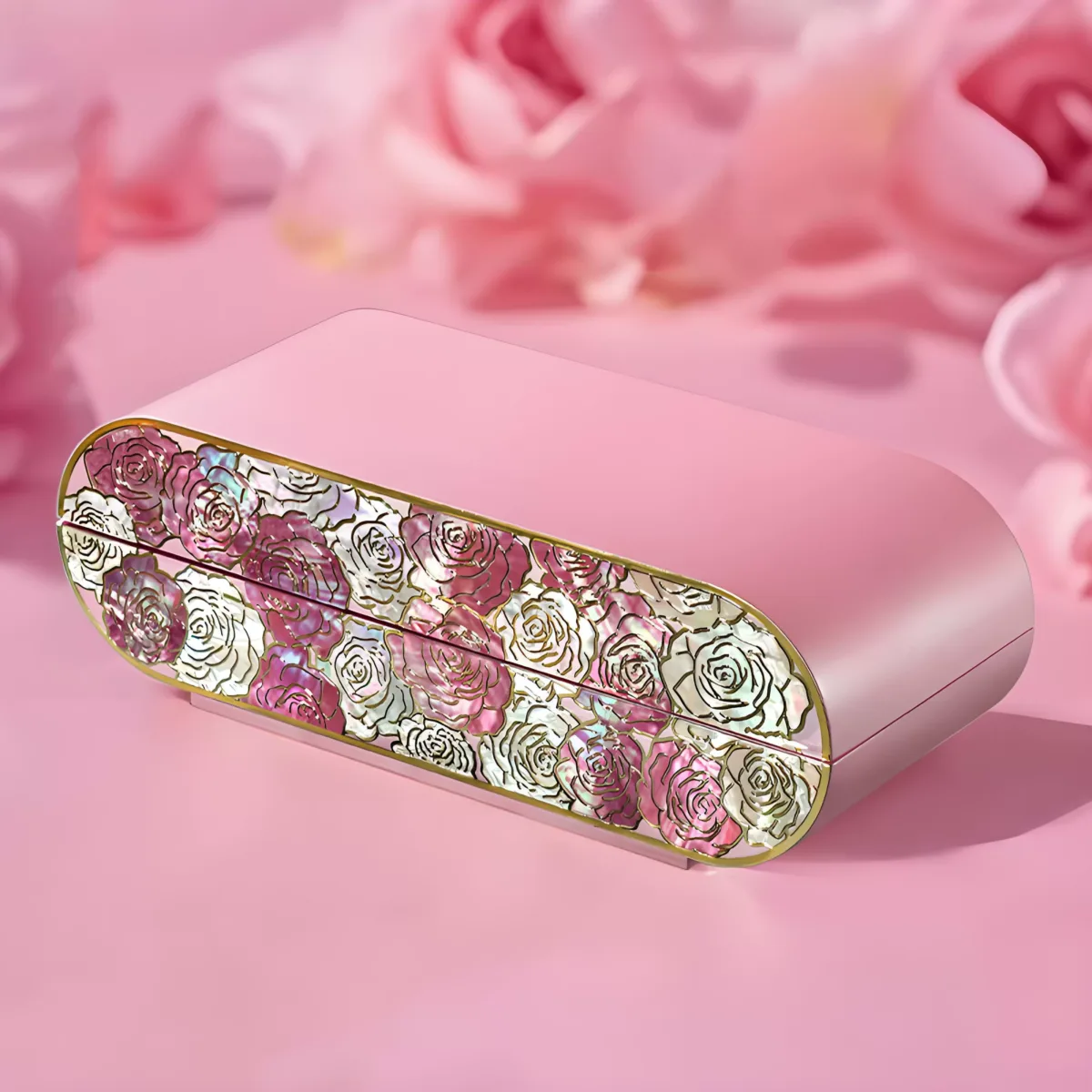
Good inlay is not only about placing shell into an object. It is about deciding how much should be used, where the light should gather, and how the surrounding surface can support it. Too much shell and the work becomes loud. Too little and the composition never fully opens.
This is why restraint matters so much. The artisan is not just setting a pretty material. They are composing with contrast, rhythm, and reflected light.
Mother of pearl becomes persuasive not when it dominates the object, but when it is placed carefully enough to make the whole surface more alive.
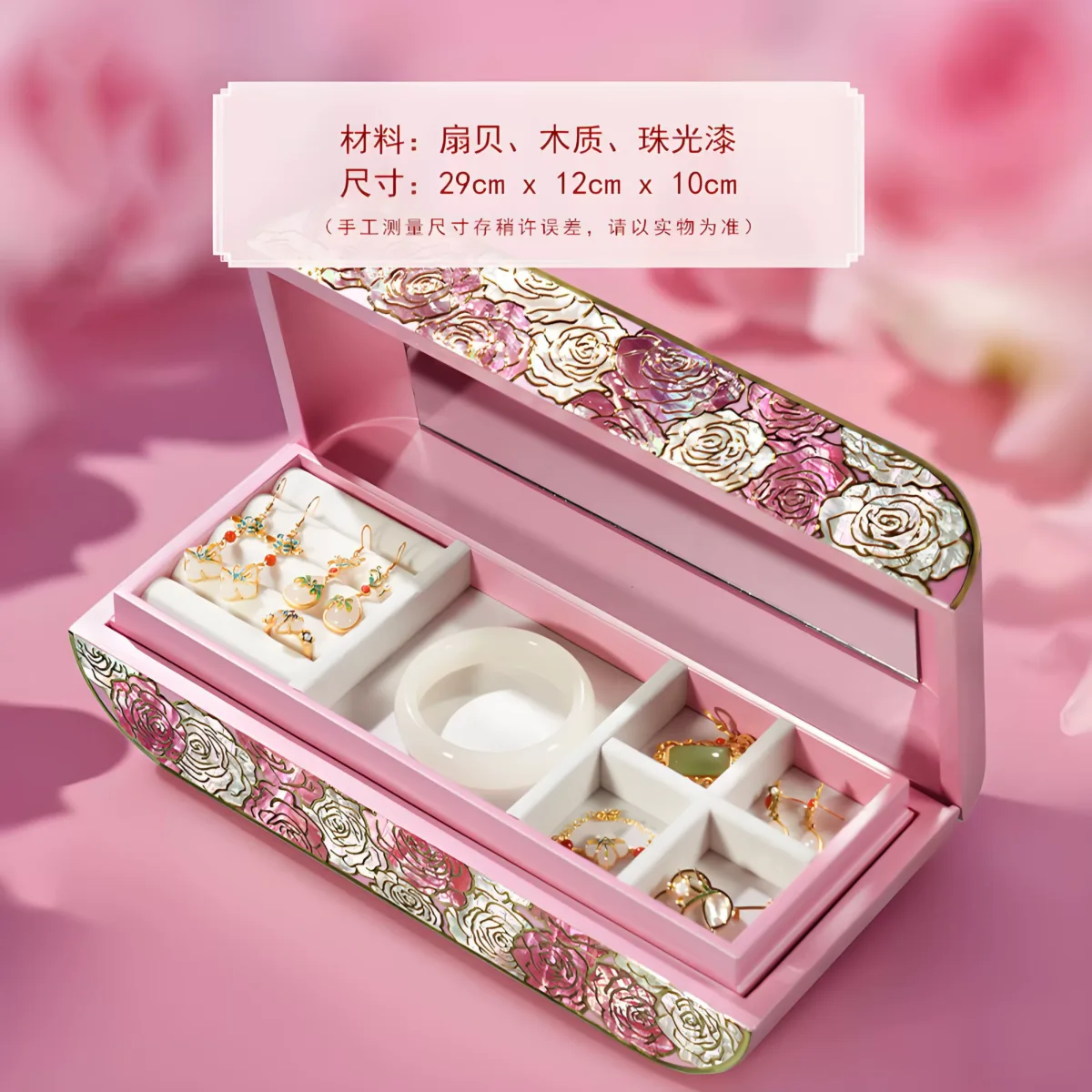
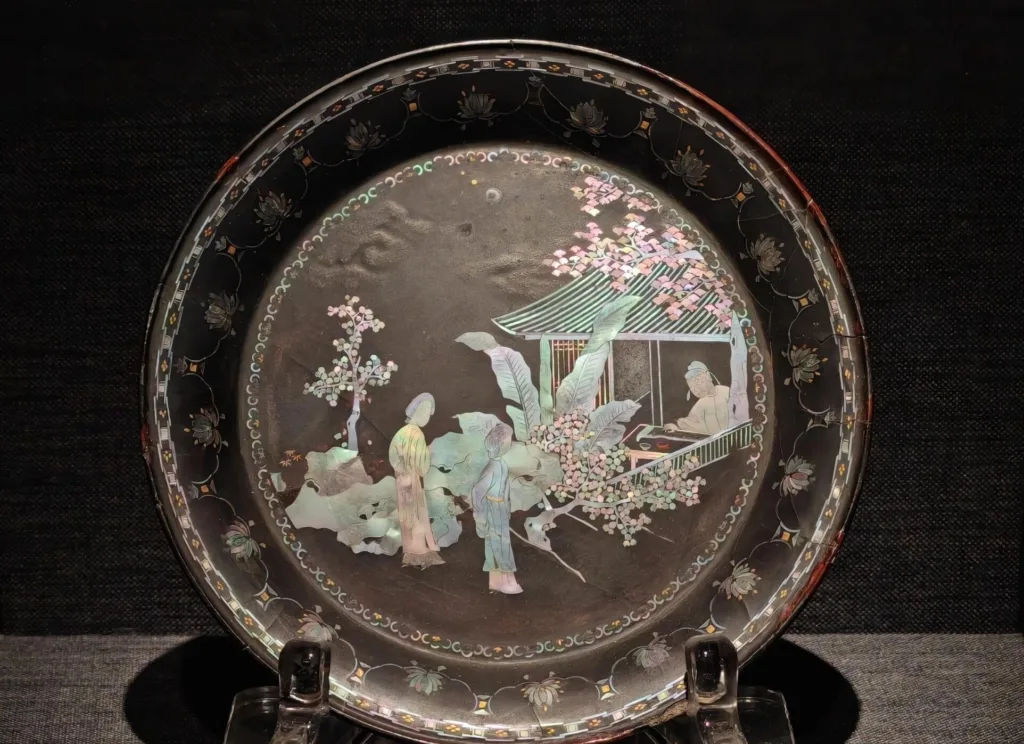
One of the most compelling uses of mother of pearl appears in dark lacquerware, where nacre is given a quieter field against which to move. The lacquer offers depth and stillness; the shell offers changing light. Together they create a surface that feels both calm and active.
That relationship explains why shell inlay has remained so valued in boxes, trays, furniture, and personal objects. The contrast is not only decorative. It is structural to how the object is seen.
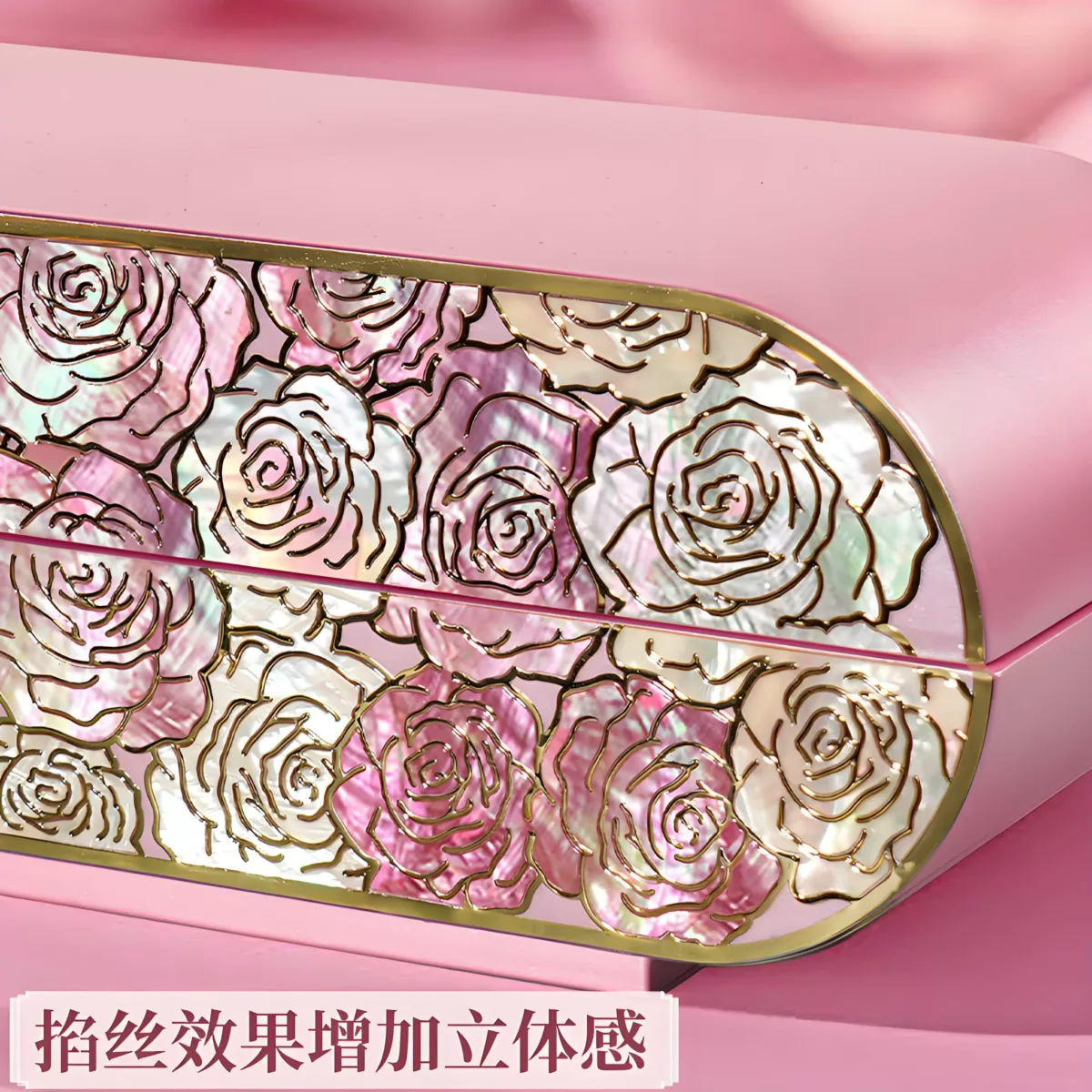
In a market crowded with imitation finishes and printed iridescence, mother of pearl still matters because it refuses perfect sameness. Each cut carries its own light. Each surface reflects differently. The material remains resistant to becoming generic.
That is why it continues to deserve attention. A genuine inlaid shell object contains two forms of patience at once: the natural time needed to form nacre, and the human time needed to place it well. What you keep is not just ornament, but evidence of both.