Subscribe to stay in-the-know
Enter your details to receive communications about our products and services, events, and cultural endeavours.
Subscribe to stay in-the-know
Enter your details to receive communications about our products and services, events, and cultural endeavours.
A useful guide to choosing a comb that feels good in the hand, treats the hair gently, and earns a place in everyday ritual.
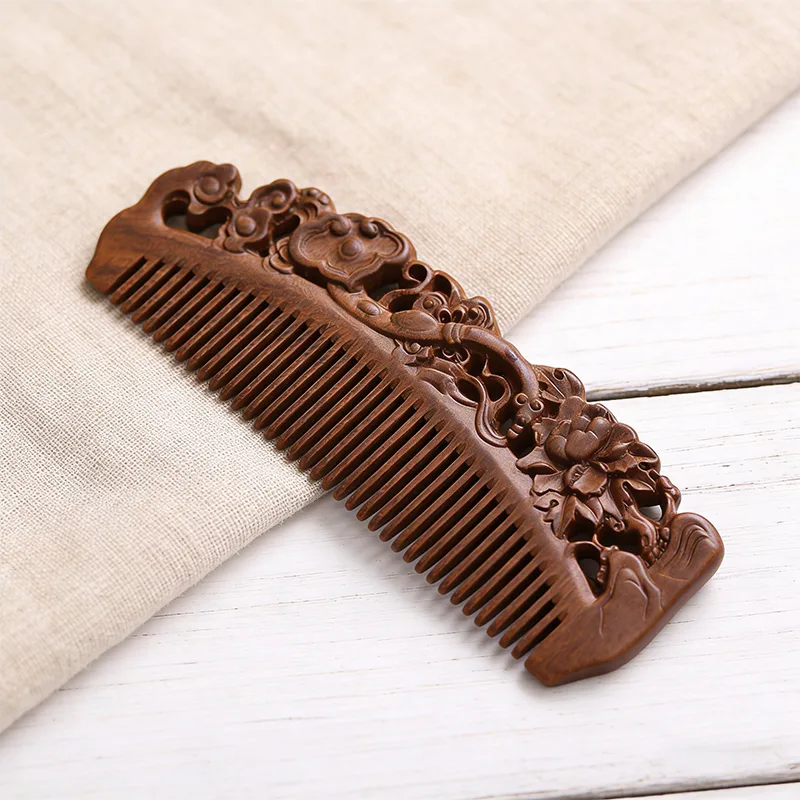
A handmade comb is a small object, but it is one of the few things that meets the body every day. It touches the scalp, moves through the hair, and often ends up living on a bedside table, in a handbag, or beside a mirror. That means a good comb should be judged less like an accessory and more like a tool you will actually keep using.
The market makes this harder than it sounds. Many combs are sold through vague claims about wood, wellness, or craftsmanship, while the details that matter most are easy to miss: tooth spacing, finish quality, balance in the hand, and whether the material suits the way you use it. A better choice begins with reading the object more carefully.
Before comparing woods or patterns, ask how the comb will be used. A comb that lives by the vanity and moves through freshly brushed hair can be denser, more refined, and slightly more delicate. A comb that travels in a bag should be easier to grip, easier to clean, and less fussy about constant movement. If your hair is thick, long, or prone to tangling, the spacing of the teeth matters more than decorative carving. If your goal is a slower grooming ritual, comfort in the hand may matter just as much as performance.
In other words, the first decision is not aesthetic. It is situational. A handmade comb becomes useful when its form matches the rhythm of real life.
With handmade combs, material changes more than colour. Dense woods such as ebony tend to feel heavier, steadier, and visually quieter. Sandalwood and herbal wood blends often feel warmer in character, with a softer visual grain and a lighter presence in the hand. None of these materials is automatically better. The question is whether the density, balance, and surface suit repeated daily use.
What you want to avoid is material that has been poorly described or poorly finished. If the grain is hidden under a thick artificial coating, the object may look polished without actually feeling good to use. A good wooden comb should feel resolved rather than plasticised. The material should still seem legible through the finish.
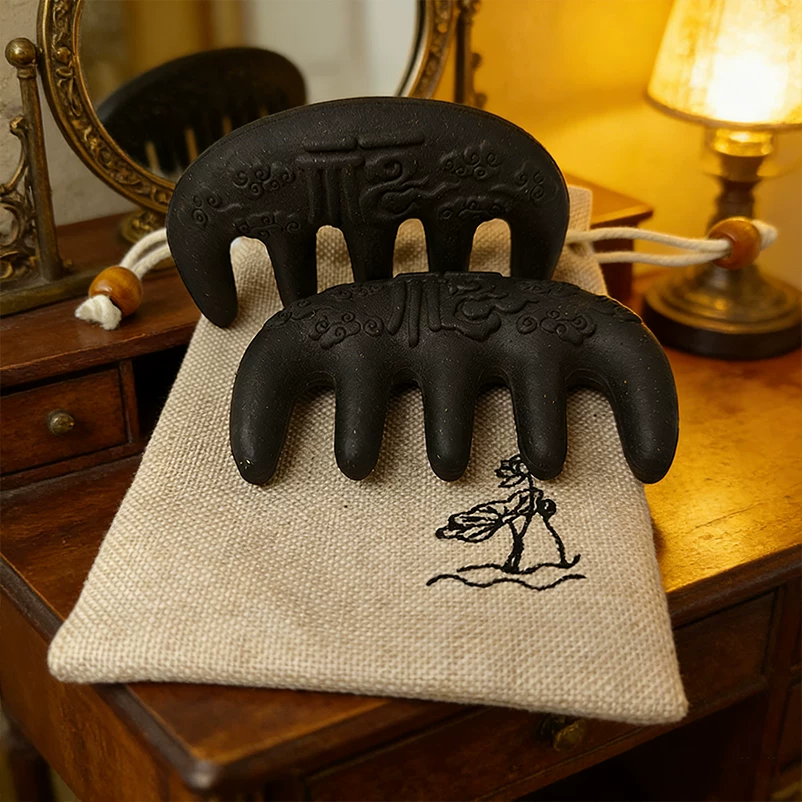
Most weak combs fail where they matter most: at the teeth. Look for spacing that suits your hair type, but also for consistency. The teeth should feel evenly cut, not hastily stamped. Their tips should be smooth enough to pass through the hair without scratching the scalp or catching at random points.
This is one reason handmade finishing still matters. Even when the overall silhouette is simple, the tooth edges and the spaces between them reveal whether time was spent refining the comb after shaping it. A graceful profile means very little if the actual working edge feels rough.
A handmade comb earns trust through contact. The proof is in how quietly it passes through the hair.
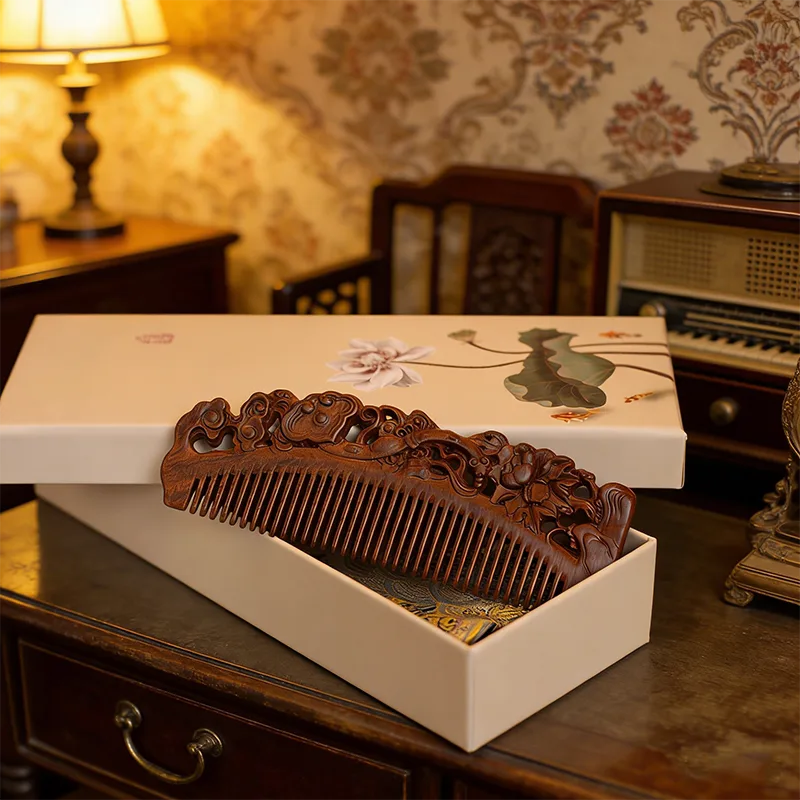
Once the teeth are right, subtler qualities begin to matter. Does the comb feel balanced, or does it seem oddly light for its size? Is the surface smooth in a way that still honours the grain, or has it been made slippery with over-coating? Does the spine sit comfortably between the fingers? These are small questions, but together they determine whether the comb becomes part of your routine or remains mostly ornamental.
Handmade objects should not feel overdesigned. Often the best sign is restraint: clean edges, a finish that allows the material to breathe visually, and a weight that gives the comb calm presence without heaviness.
A well-chosen comb does not need dramatic treatment. Keep it dry, wipe away oils and product buildup, and avoid leaving it in standing water or direct damp heat. If it travels often, give it a pouch or a stable place so the teeth are not knocked around by keys and metal objects. Care is simple when the object is already well made.
That is the real goal of choosing a handmade comb. Not to collect another pretty thing, but to find a small tool whose material, shape, and finish continue to feel right months later. Good craftsmanship in this category is intimate rather than showy. It proves itself quietly, one ordinary morning at a time.